
According to my oldest journals, therapy was something I wanted to try ever since I was a teenager. While most people in my life shy away from having deep, honest, personal conversations, I love it — and the idea of having that discussion with a professional felt worth every penny. I was always interested in bettering myself, gaining perspective, and expanding my already broad emotional knowledge. But it wasn’t until I turned 30 that I was finally able to do it.
After two years of weekly therapy sessions, I learned many valuable lessons — so many, in fact, that this post originally listed 5 and was over 3,000 words long. But whenever people discover that I was in therapy, they often ask me the same question: what is the most important thing you learned? And there is always one thing that comes to mind.
What I wanted: perspective.
During one of our first sessions, my therapist asked me what I wanted out of therapy. Someone to just listen? Someone to help (gently) hold me accountable? Someone to teach me better coping skills? “Perspective,” I told her. “The way I’ve been doing things hasn’t been working. I would appreciate another way of looking at things.”
The reason I decided to finally try therapy in the first place was a common one: I was single for several months, trying my best to heal from a toxic relationship, and I was miserable. I was in a relationship from age 15-27, then 27-29. Eight months was the longest I had gone without being someone’s girlfriend since I was a teenager. Dating at 30 was a struggle and online dating was unfamiliar territory. I didn’t know the rules or the game, or who I was, or what to do with myself. Ultimately, I wanted to be “okay” being single while I built myself up again because for the longest time, I viewed the status of “single” as “failure” and being in a relationship as “success.” (Yes, I was once someone who would have rather tolerated meanness and disrespect than be by myself. We unpacked why, but that’s for me and my diary.)
During one session, I tried my best to explain how I felt about being single: “When I’m single,” I said, “I feel like I’m wasting time. Like I should be constantly searching for my next boyfriend. Like if I don’t give all the love I have inside me to another man, I am wasting it. Like it will expire if I don’t, and then I’d have to create more. I’d have to dig deeper and deeper to find more love, and I can’t if I’m always frustrated and disappointed and tired. And the longer it takes, the more of it I waste.”
It was embarrassing to say out loud. Much of therapy feels embarrassing. But I immediately felt relief once I did.
My therapist nodded, taking notes. Then she said, “Have you ever considered giving all the love you have to yourself?”
I blinked at her. Myself?? What did that even mean? “… No.” I said.
“I think you already give a lot of love to yourself, but you don’t see it that way.” She paused as I processed her words. Perspective. She was right: I didn’t. All the ways I took care of myself, tended to my health and my body and my hobbies, didn’t register as love at all. But it was.
Then she said something I will never forget: “If you give your love to yourself, you aren’t wasting it.”
It might sound obvious, but it isn’t. It was something that didn’t click for me until I heard it. She was right — I had given a lot of love to myself for a while, but I wasn’t intentionally doing it or looking at it that way. I was just “taking care” of myself, by default, to survive. But it wasn’t an intentional act of love like I often I did for my family and friends.
Since then, I consciously started giving myself love the way I would for a friend or a partner.
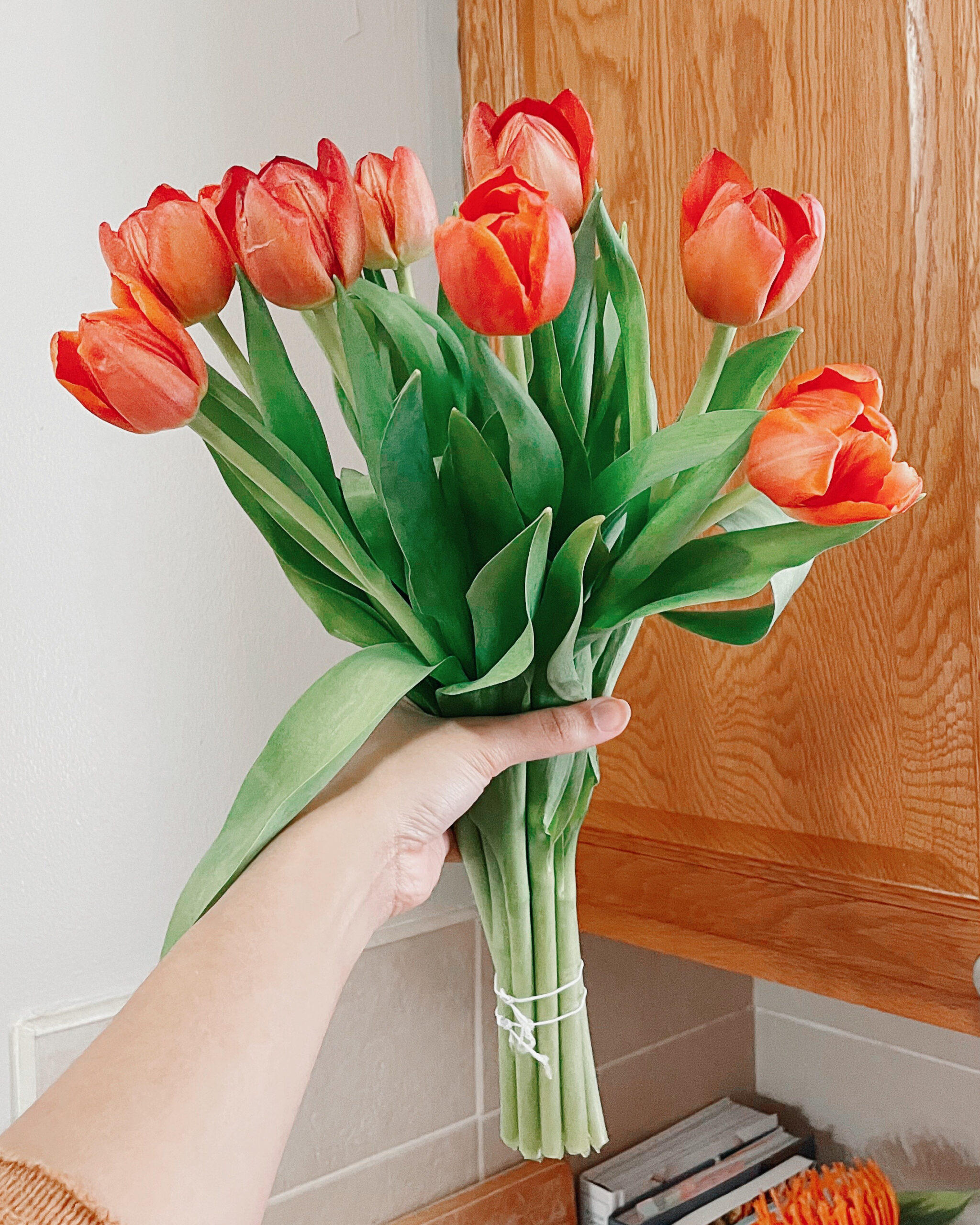
That meant buying myself things I would normally buy for others (my favorite treats after a rough week), or the things I expected from romantic partners (like flowers). It meant enforcing boundaries and giving myself pep talks and support. It meant being my own cheerleader and getting enough sleep and making sure I went to all my doctor’s appointments. It meant checking in with myself on the regular, oftentimes in my journal, like I would have with a boyfriend. I asked myself questions I would have asked him: “How was your day? How are you feeling? What could I do to make it better?” And then doing it. It meant taking myself out on dates, like trying new restaurants alone, going to The Met alone, and watching new movies alone.
Honestly, it was the one thing from therapy that I needed to hear the most.
Over time, I learned that living alone and being single wasn’t as awful as I thought it would be. In fact, 31 and single may have been my favorite year as an adult. I learned so much about myself and was able to still have fun and experience things, but with much more respect and intention about where I was in my life. Now, as I approach 33, I expect even more growth, self-trust, and experiences to come.
Don’t get me wrong: it is still a dream of mine to meet “my person” someday, and be in a happy, supportive relationship and build a home with someone who loves and respects me. But at least now I’m not letting my love “go to waste” while I wait for that to happen. I try my best to intentionally give it to myself, every day. And it has made such a difference.



Fantastic, Megan—I am happy that you could reach such a place!
Thank you, Alan! I really am too 🥲 It was a long time coming.
I’m so proud of you, friend.
Therapy was useful to me in many ways, and perspective was certainly one of them. When we feel everything so deeply and personally, it’s hard to untangle our own biases and thoughts from a situation.
Thank you, Mish. Tbh this post was a reminder to myself, if not advice for everyone else. And yes I agree — feeling so attached to certain feelings and opinions is hard to unglue sometimes, and I really needed someone to help me with that because I wasn’t happy with those attachments. It’s certainly an ongoing practice and I’m sure it will always be but therapy helped a lot x
Megannnn, I loved this post so so much. I honestly think that’s what therapy has taught me as well! Sometimes them just asking you a simple question changes everything. Since you originally said that this was 5 things you learned, it would be really cool if you made this a series, and talked a bit about some other important things you’ve learned while in therapy.
Completely agree! I love how my therapist helped me gain so much perspective. I do think the other things are worth sharing too, so maybe I will do another post in the future… 🙂
Thank you for being so vulnerable with us and sharing your experience.
It’s wonderful that your therapist asked you what you wanted. I’ve only had one therapist before and they were the type to just listen and only provide advice the last 5 minutes of our session which isn’t what I wanted. It didn’t work out and I stopped going to therapy (also due to no health insurance). I wish there was a better way to get matched up with a therapist maybe there is but I just haven’t been to the right places. Anyway, I want to start therapy again this year, it’s one of my goals. ♥
http://www.mooeyandfriends.com
Thanks for your kind words, Michelle! It can definitely be challenging finding the right therapist – I just got super lucky on my first try. I wish you the best of luck in finding a better-suited therapist in the future. And if THEY don’t ask you what kind of feedback or style of therapy you want, don’t be afraid to tell them what you are looking for and see if they can accommodate! x