

Recently, I had to come to terms with something about myself: I love buying new notebooks to use for my bullet journal. It motivates me when I have a new “friend” to tell all my thoughts to. Because of this, I noticed I get a little restless around the 3- or 4-month mark as I eye the other notebooks I’m dying to use. Then I start “losing interest” in my current notebook because I’m thinking about the others! (Thank god I’m not this way in romantic relationships, huh?)
I usually spend 6 months in a bullet journal, but this year, I’ve had so much to say that I’ve finished in 5. When I realized in April that I probably wouldn’t have enough room for June, I started to panic. Switching notebooks after only 5 months would throw off the rest of my carefully planned year. Then I thought: Wait, what if I try out a new system for the summer, and just commit to filling a notebook in 3 months? I’ve already been planning and thinking in terms of seasons in my bujo for several years, so why not use the same seasonal approach, but with my notebook, too? It would support my love of using new notebooks while also solving my immediate need for a fresh notebook in June.
There was another thing to consider, too: my long-form journal. For those of you who don’t know: I have several notebooks I write in, but for the sake of this post, let’s just take about two: my bullet journal, which I use for tasks and goal-setting, and my long-form journal, where I document my life in a more traditional sense. For years, I have kept these journals separate. Once, I combined them, but adding long-form entries to my rolling dailies was a pain to look back on when I was writing my book. (I had to sift through a lot of to-do lists to find the heartfelt stuff.) But now, for summer, I am revisiting the idea of combining them into one notebook again, but in a slightly different way.
Here’s how I’m going to do that.
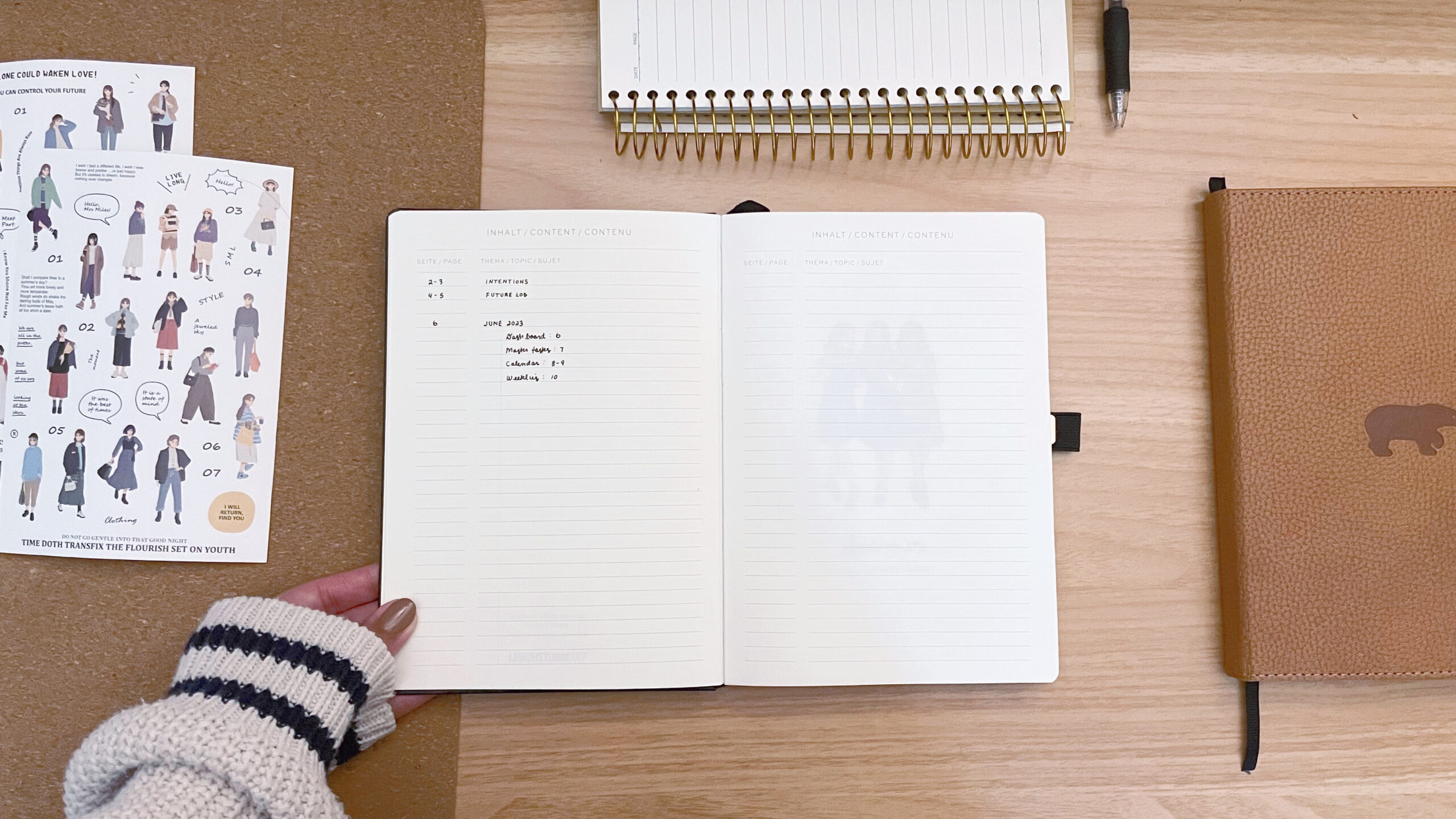
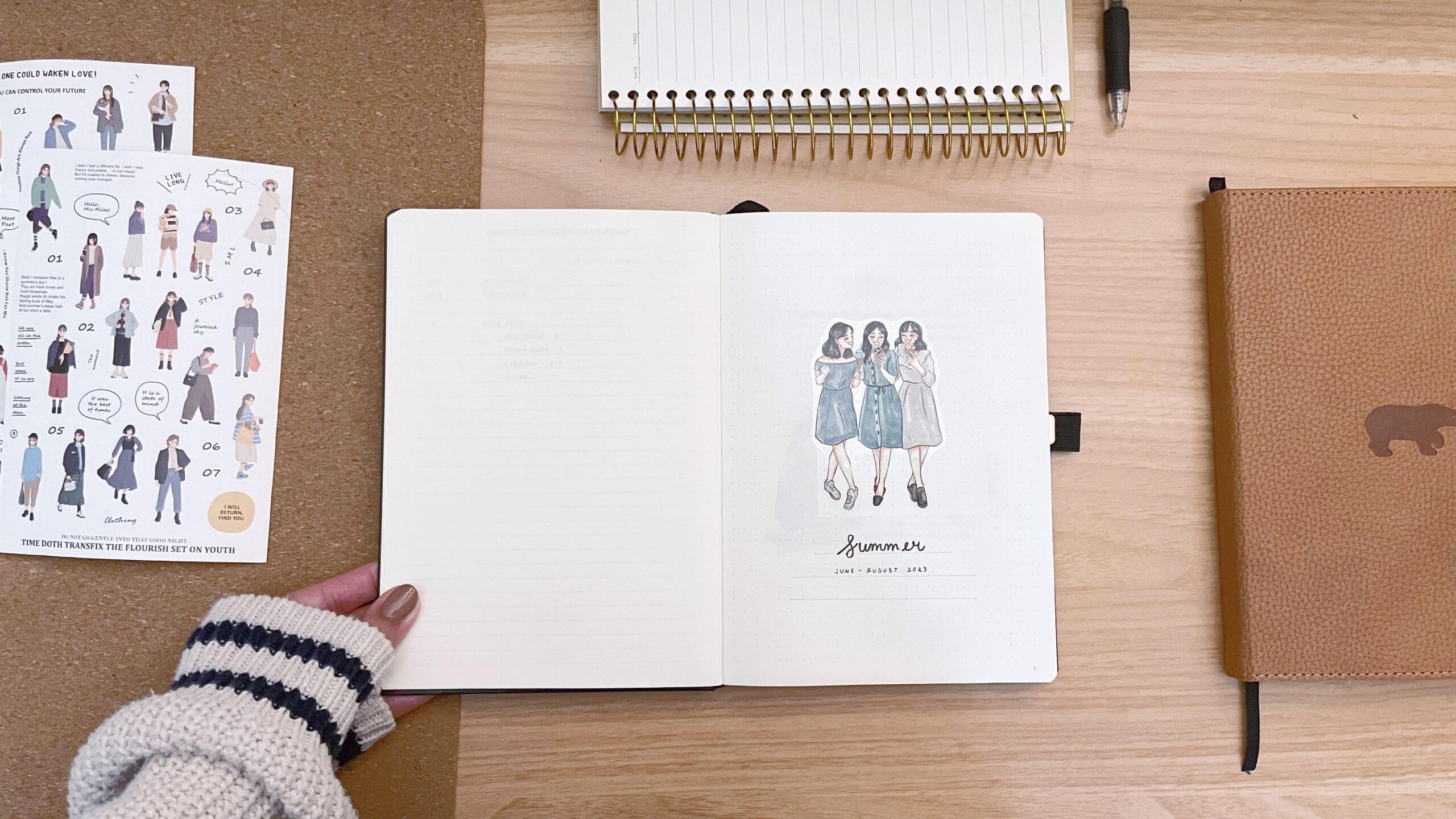
The first half: the bullet journal
The first two-thirds of the book will house my bullet journal. I like to think of myself as a minimalist when it comes to my journaling practice, meaning I don’t create elaborate spreads, draw, or paint in my journal. However, I do like to have fun with it, so I tend to sprinkle stickers and sticky notes here and there. I also don’t set up collection pages in advance anymore. I keep a lot of these things in Notion, or track them monthly (you’ll see that in a moment). When I do feel like adding a collection page, I’ll just add it to the next clean page and then index it to find it later.
With that in mind, here are my non-negotiables.
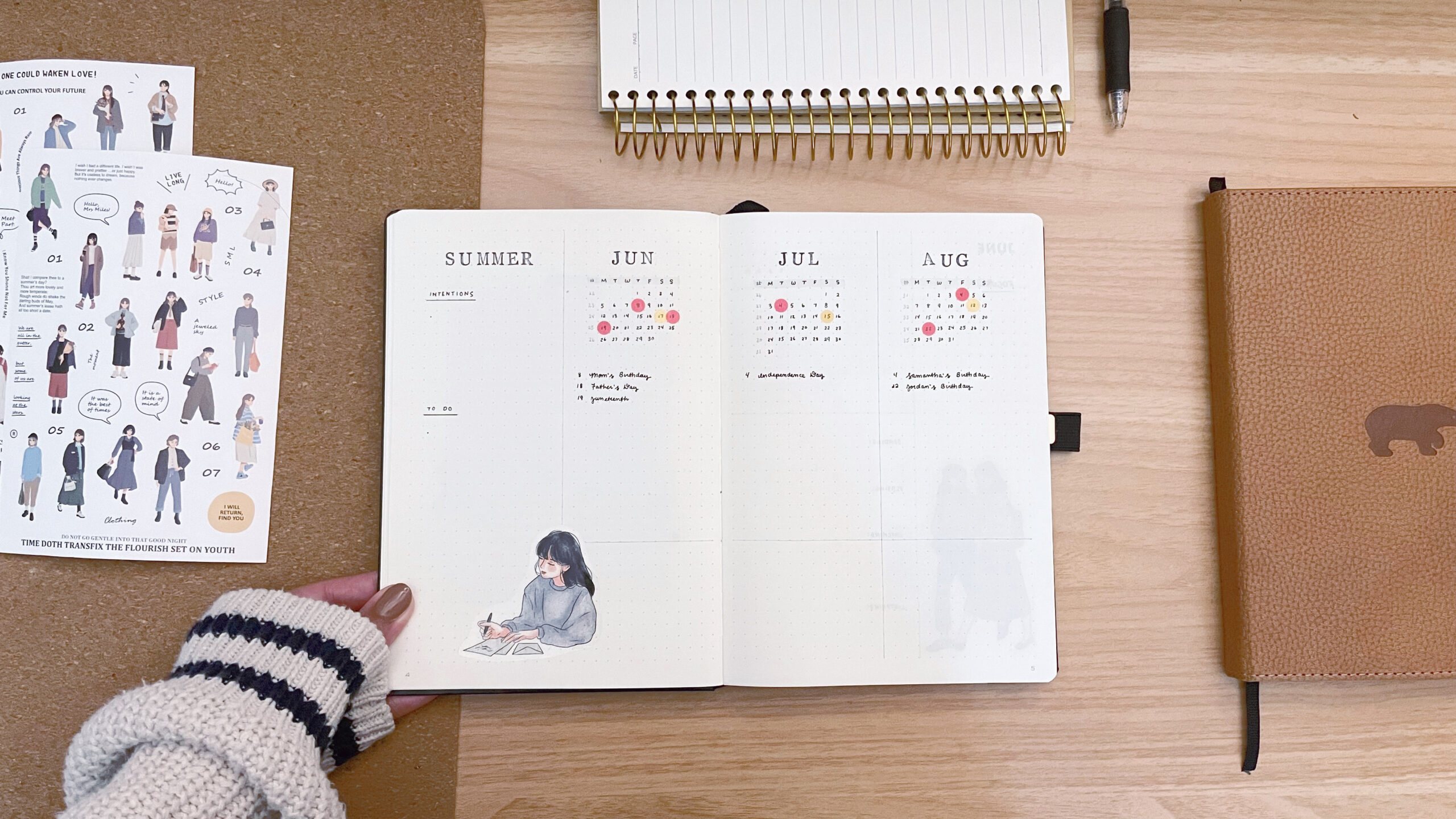
The future log
The future log is the place in my journal where I plan for, well, the future — particularly in relation to the season. I like to split this two-page spread into four columns. On the far left is the seasonal column, where I brainstorm my intentions for the season, and then list some tasks or projects I’d like to get done sometime over the next 3 months.
Then I list out all the birthdays, appointments, holidays, and events over the coming months that I have in my iCalendar. Then, the bottom section for each month is where I allocate the general seasonal tasks to the actual month I’d like to do them.
I definitely recommend thinking of your goals and projects in terms of “seasons” to not only ground yourself in the present, but to add a little more meaning and intention behind what you’re doing and why.
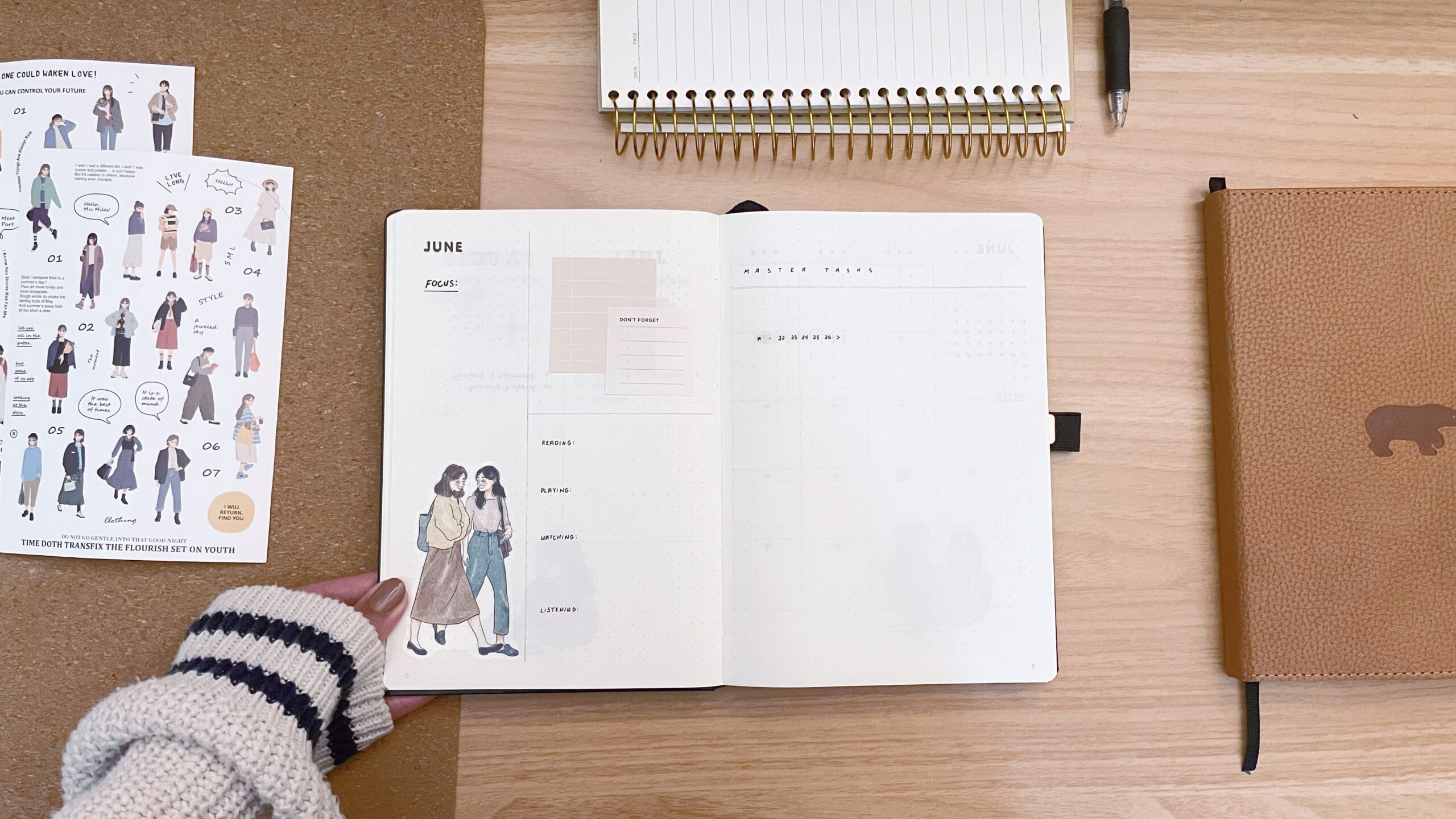
The monthly dashboard
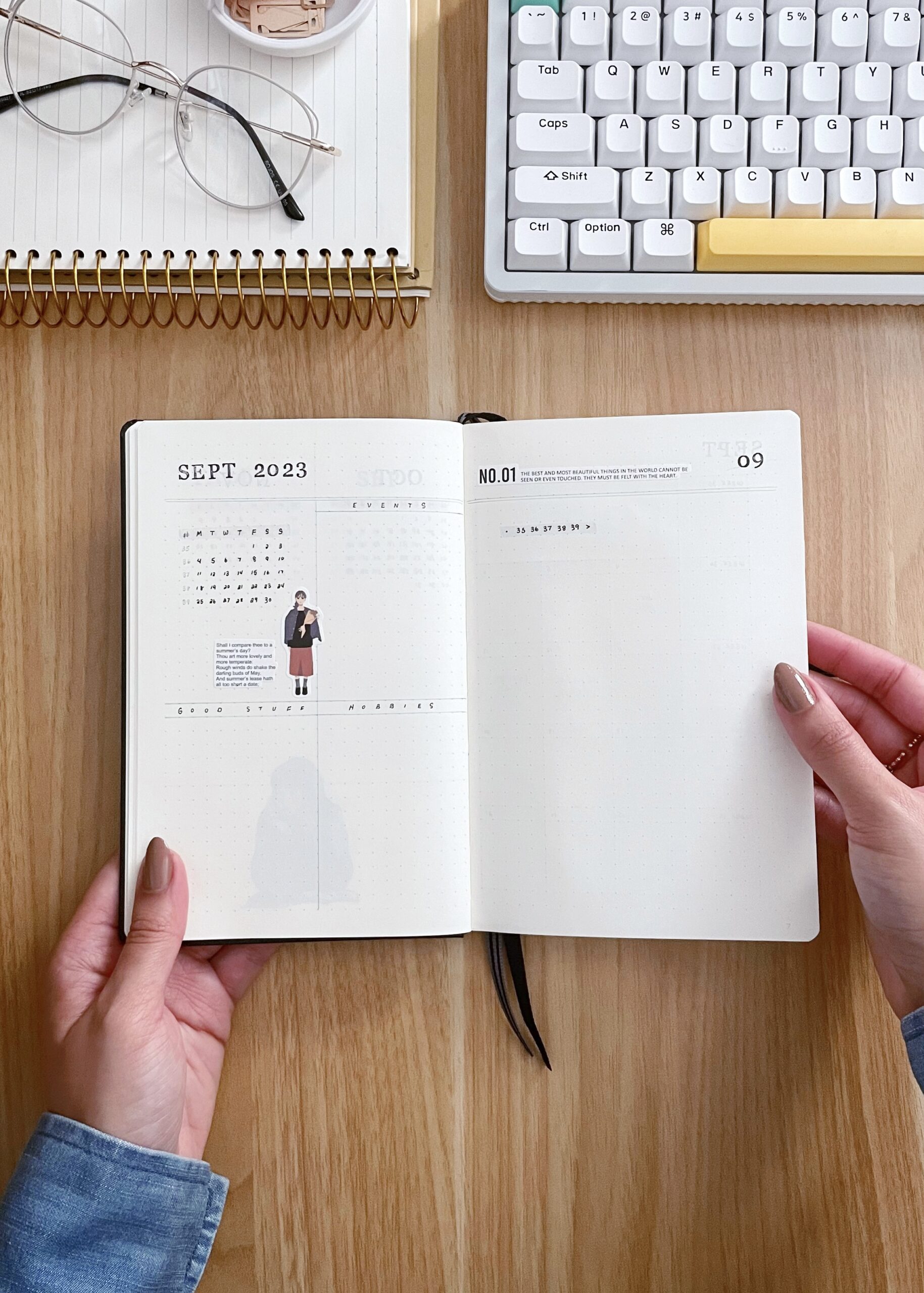
This is the first time I’ve updated my monthly dashboard in quite some time. I enjoyed doing collages in the past, but wanted to switch things up and use this page a little more as a memory keeper. I keep a record of all the entertainment I consume in Notion (with plenty of space to write out reviews, notes, and thoughts), but would like to keep a short monthly list in my journal so I could get a snapshot of what I enjoyed each month.
Then I added a margin (I’ve been using margins for years so this hasn’t changed!) for the focus and any other events that may be happening that month.
The master task list
On the right, I’m sticking with my usual Alastair method master task list to help me schedule tasks I’d like to do that month, ahead of setting up my weeklies. It’s a great way to keep track of things you’d like to do in the near future when you don’t set up your weeks in advance.
The calendar view
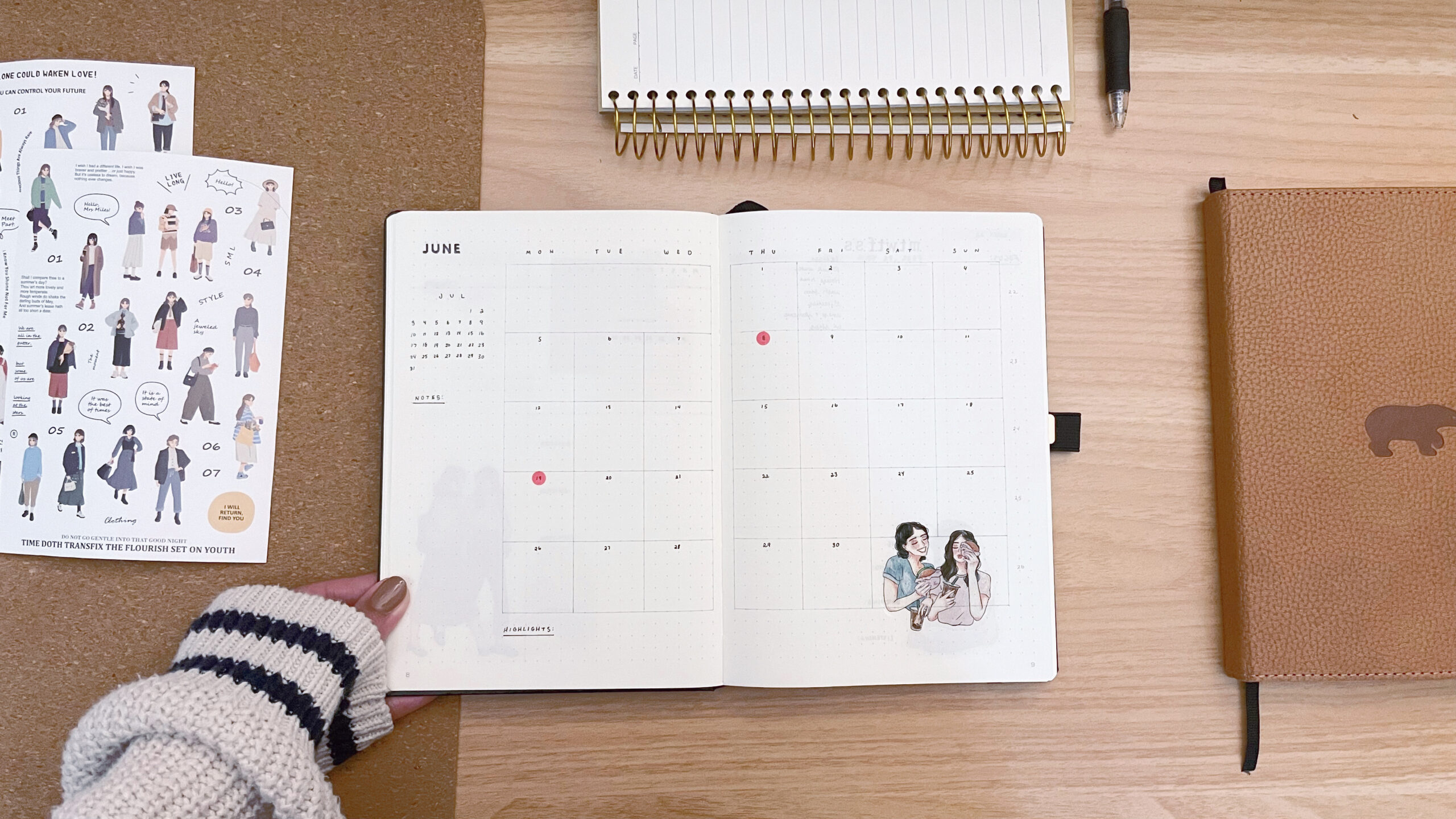
I love a good calendar view and have played around with mine a lot over the past 5 months. Now, I’m going with a full two pages so I have plenty of room for short summaries, events, and stickers. Then on the side, I have a mini calendar view of the month ahead, as well as a spot for Notes and Highlights. I treat my bujo calendar as a memory keeper, not a planning tool, so I only fill things in after they’ve happened.
The weekly dashboard
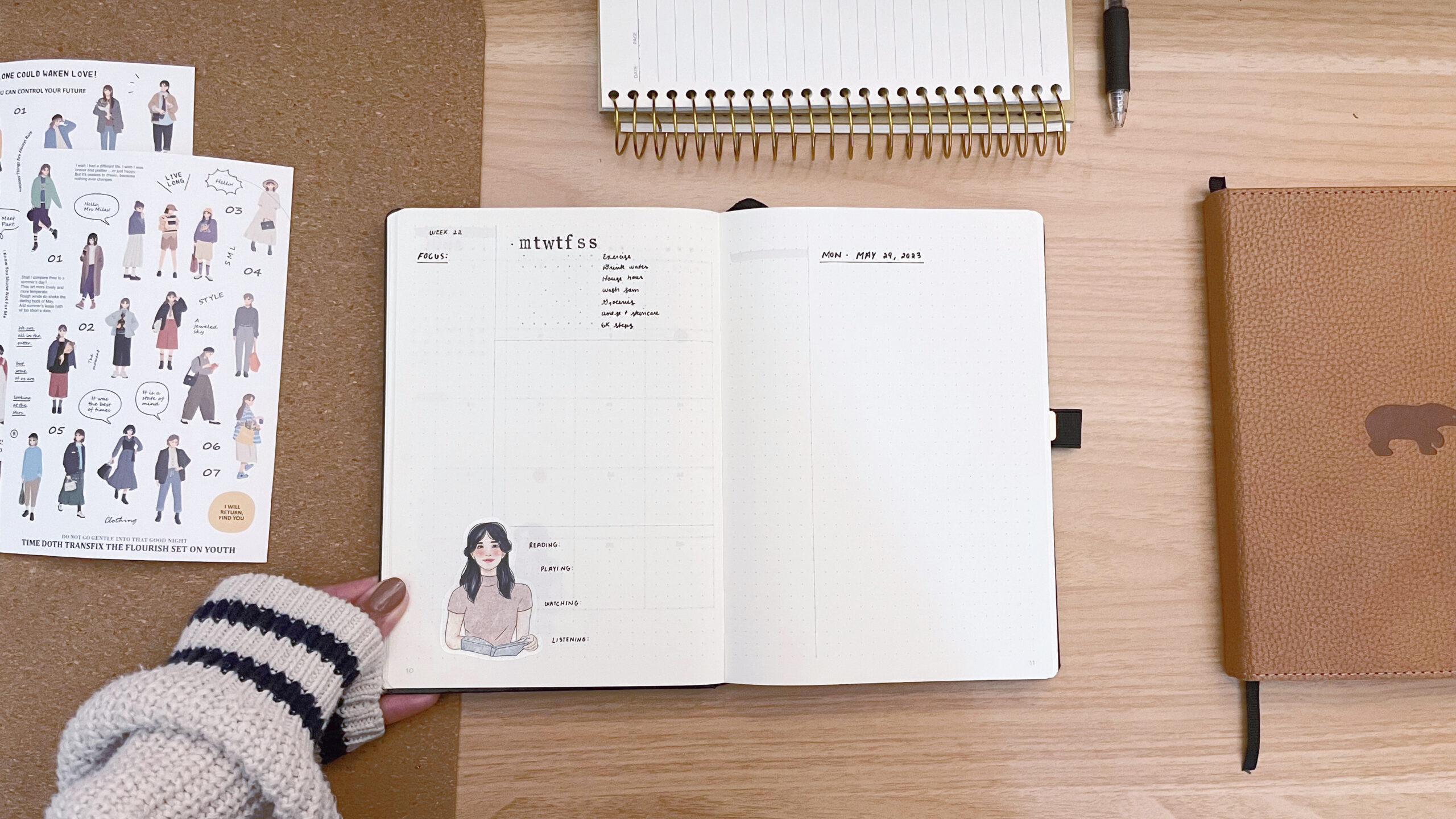
Like the monthly dashboard, I set up a weekly one, too. This view is just for the week ahead, so I migrate any tasks from my master task list to the corresponding week. The weekly dashboard is the page I refer back to the most as it houses the week’s focus, astrology, and main to-do list.
The rolling daily log
I’ve been doing a rolling daily log with margins for several years now, but have since made a few tiny tweaks: the way I set up the date, and the fact that I now start each log with my intentions for that day. It’s a nice way to be more mindful about how I want to spend my time and how I want to feel, and I often come back to it throughout the day to check in and see how I’m feeling. The margins, of course, are for notes, stickers, thoughts, etc., and I highly recommend if you find yourself needing a little extra space to come back later and flesh out some more thoughts.
Honorable mention: Intentions
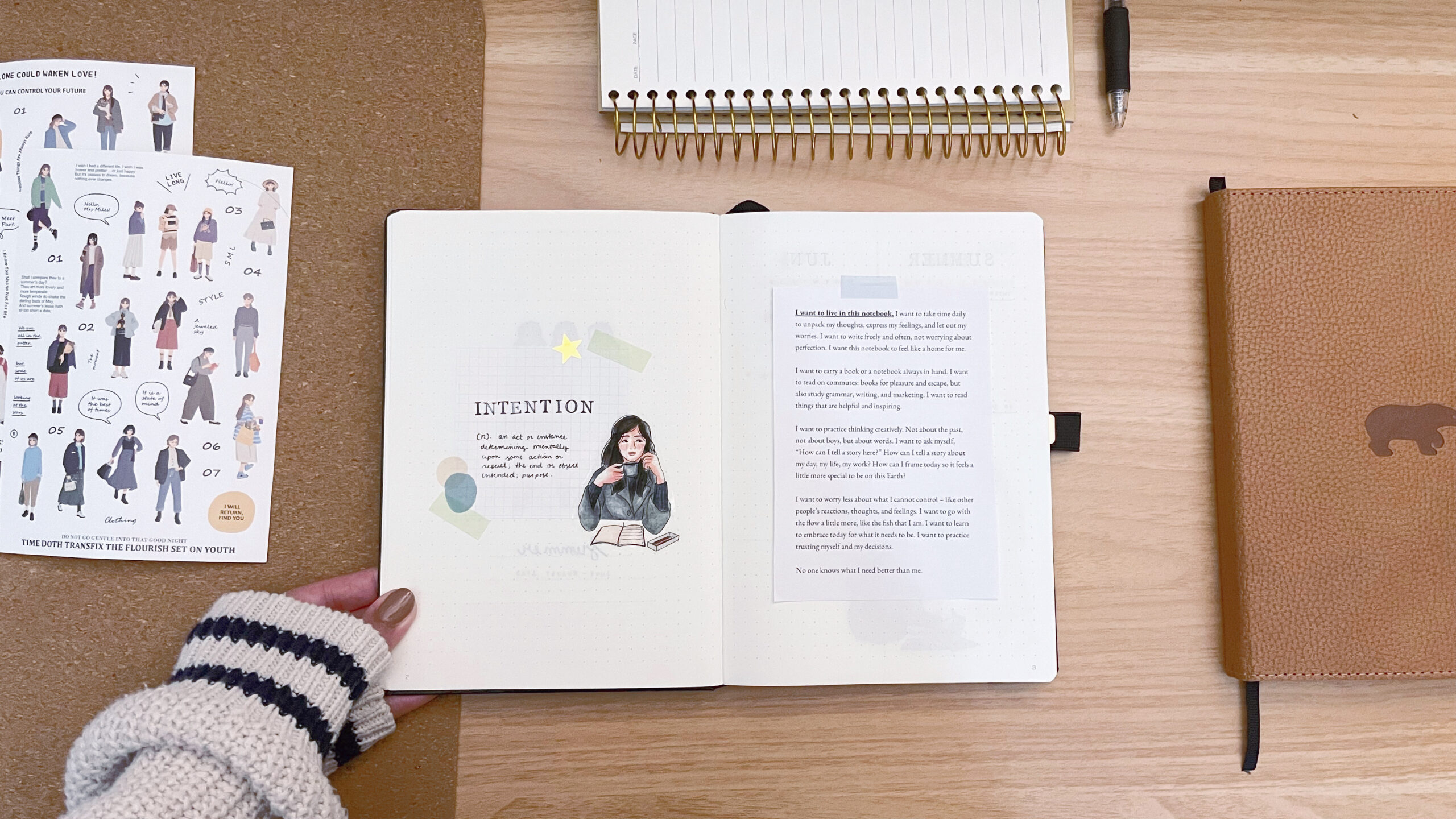
One thing I did add to the front of my notebook for the first time is an intentions page. It’s nice to revisit why I am journaling and why it’s important to me and my goals. Whenever I feel like I’m in a slump, or I start to neglect my journal a little, I will try to reread this page to remind myself of my intentions.
The second half: the long-form journal
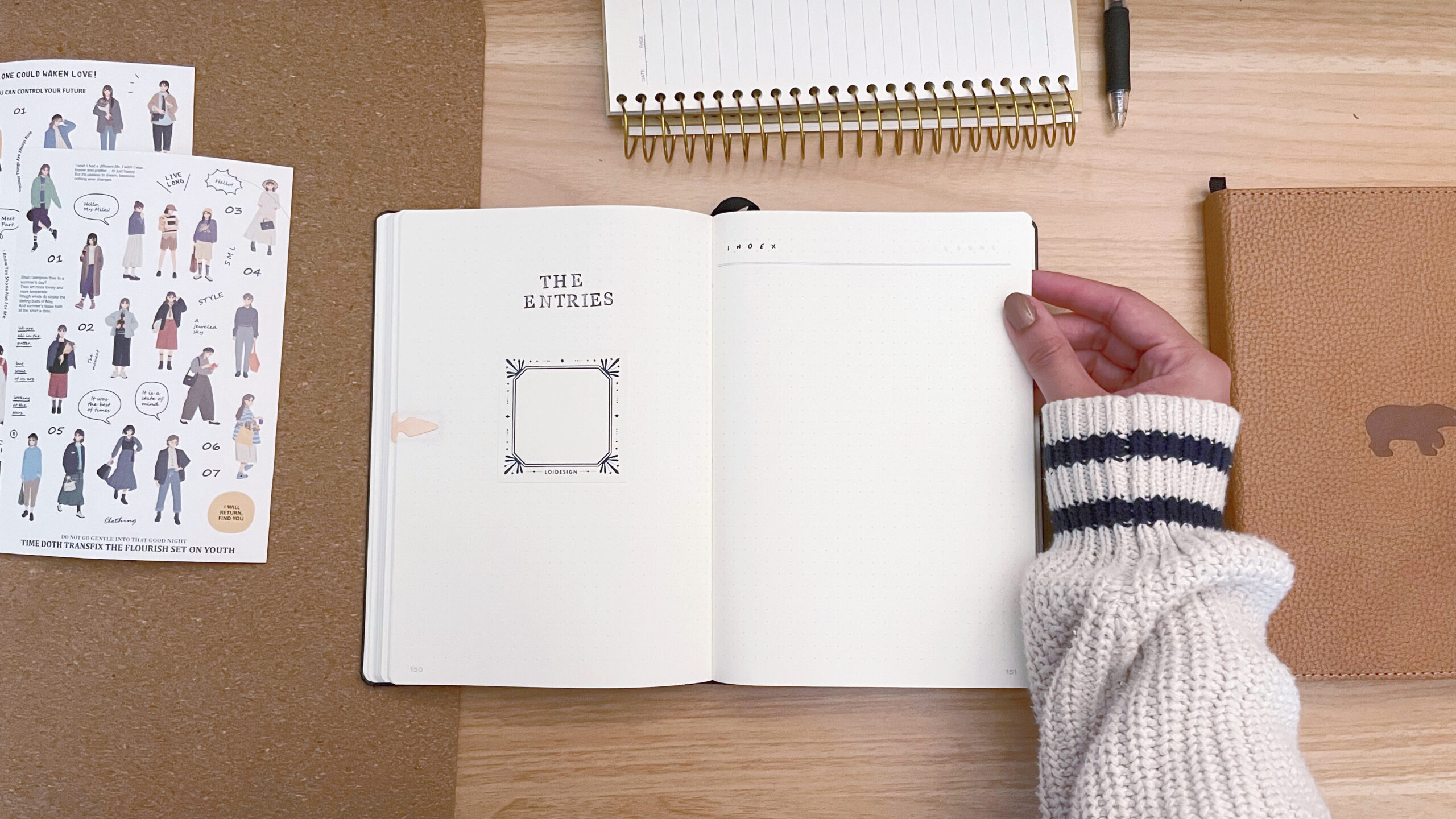
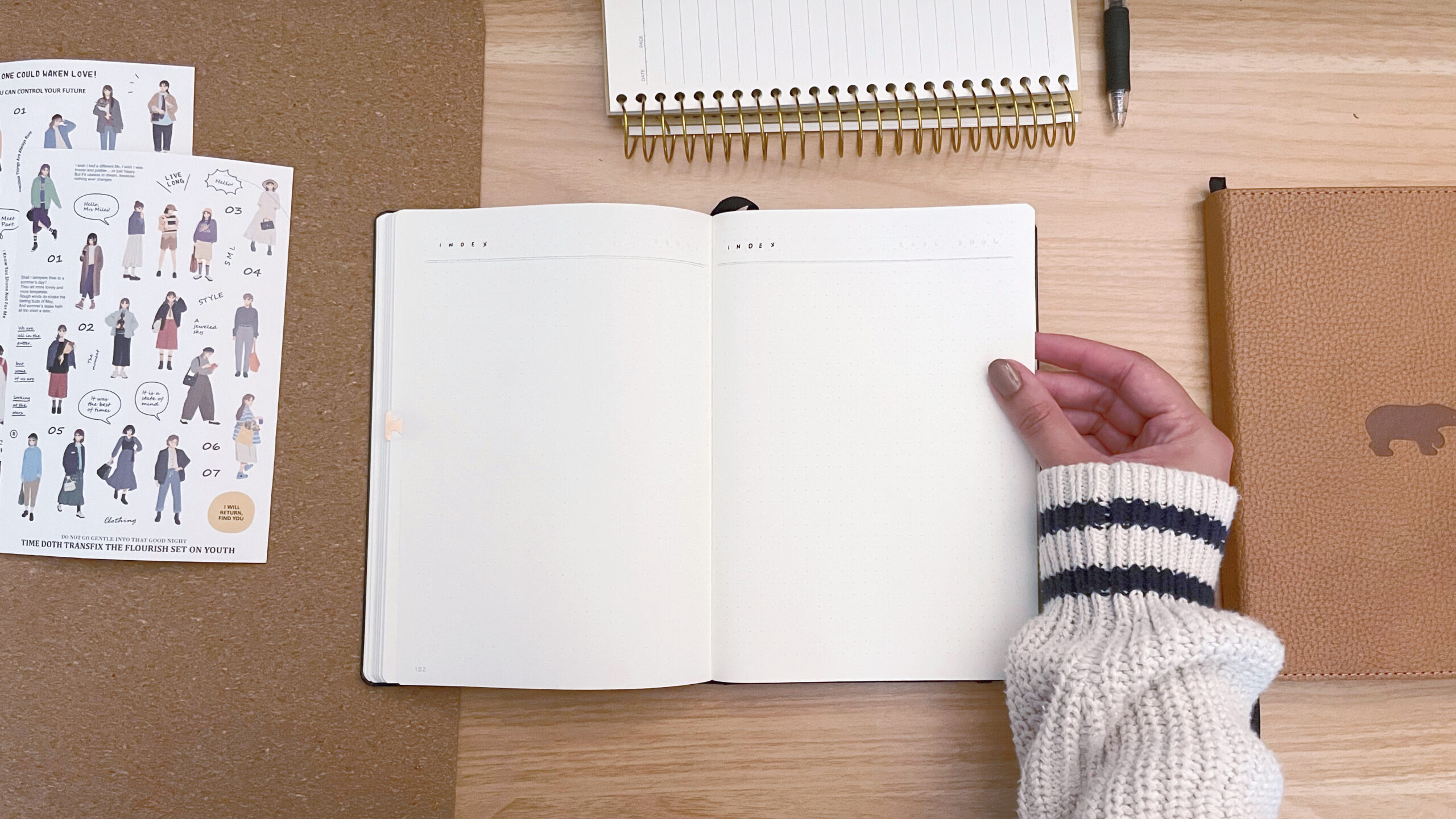
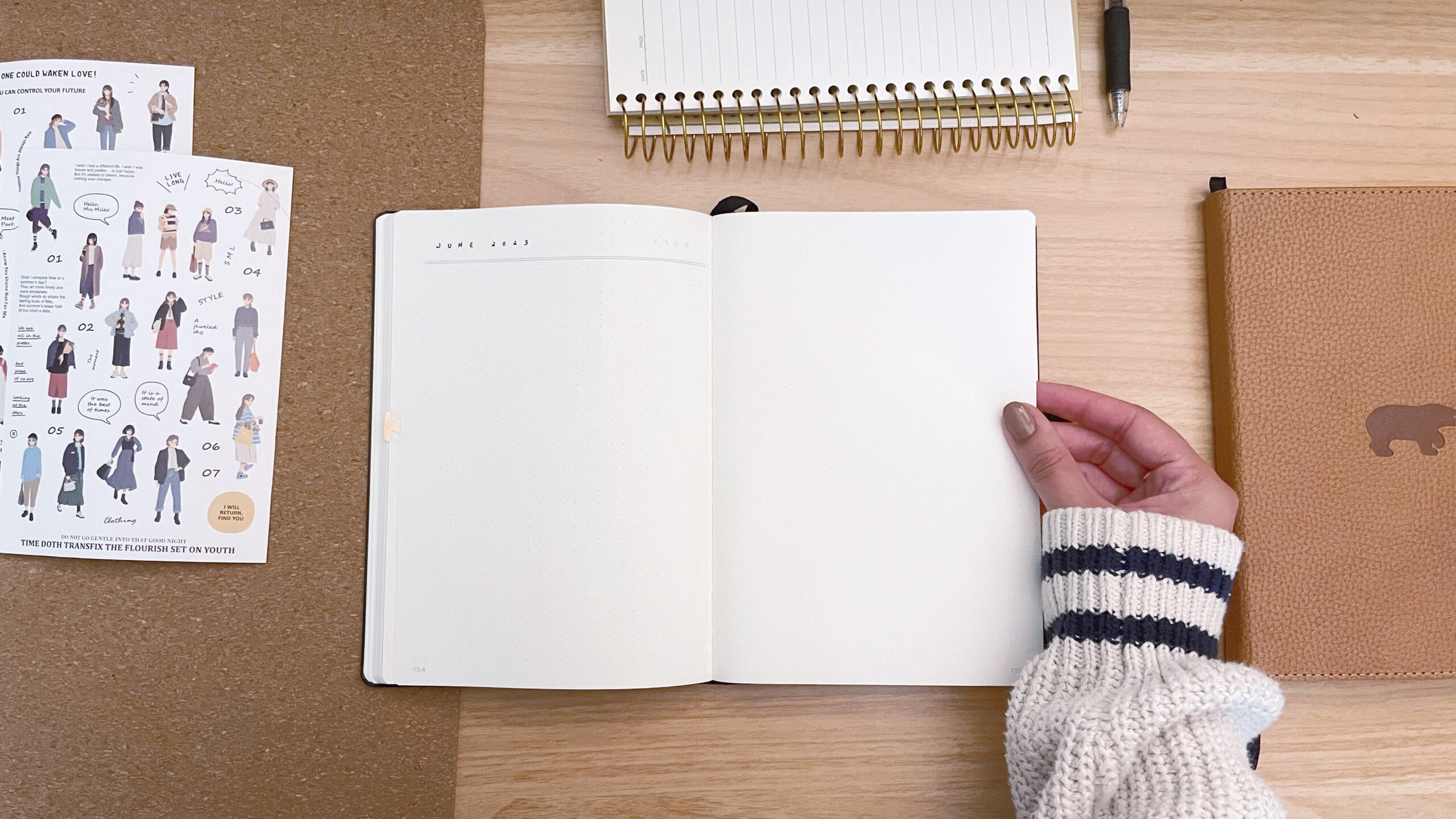
The second half of my journal is a little more straightforward: it just contains long-form journal entries. I index all my journal entries so I gave myself three pages, one per month. There are over 100 pages left in this section and I don’t usually write a page each day, so that’s plenty.
When I do write a long-form journal entry in the back, I will add a sticker to the corresponding day in my bullet journal section as a cue that this day expands to the back section. This way, I can have both journals on me at all times, and also continue to thread my pages together in one place.
So, wow, that was a lot! I hope this was helpful and interesting. Thank you for reading if you made it this far. Are you planning on moving into a new journal soon, as we near the half-year mark? I’d love to know.
Notebook: A5 Hardcover Leuchtturm1917
Stickers: Katkreatesai on Etsy





I have the same relationship with mini notebooks. I’m a sucker for small notebooks and always seem to buy a new one because I like the idea of having a small notebook tucked in every corner where I can jot down ideas or secrets. haha
I wish I could go through my journal quicker but I usually only do 2-5 pages per month so my journal lasts me all year. Your bullet journal is neatly organized! I love the idea of adding an Intentions page to the front of a new journal, it sounds like such a sweet idea. ♥
http://www.mooeyandfriends.com
Hi, Michelle! Oh I totallyy hear you on the small notebook thing. I have so many and haven’t written in them yet – but love to collection them because they’re so cute!
I go through my journals so quickly because jotting down my thoughts throughout the day helps me get them out of my head, so I can either see them clearly or move on. As long as your journal is serving you, that’s all that counts. 🙂
I have occasionally added journal entries to my bullet journal when I only have my bujo on hand and not my journal. I have never thought of the idea of splitting one notebook in half and share the notebook. I will say that the idea of using my bullet journal for 4-5 months does not bother me in the slightest. It used to, but now I’m okay if I start a new one in November instead of January. I love the layout though, and I can’t wait to see how it ends up working for you x
Melina | http://www.melinaelisa.com
Hi, Melina! I can’t believe it’s taken me this long to split my journal in half too?? I think it’s just because I have always kept them separate, but it’s nice to switch things up a little. I will try it out for the summer and if it doesn’t work, I will go back to keeping them apart. But we’ll see!
That’s what I love the move about bullet journaling: it’s so flexible, so you can change your system with your needs, or just switch to a new notebook when you need one, like you do, no matter how many months it’s been. There are no rules. 🙂
Strangely since starting to bullet journal, my notebook addiction has waned (and my bank account is glad!). I suppose that’s because suddenly I was using one journal for my scheduling, diary, gratitude list and scrapbook.
I, too, finished my 2023 bullet journal in just five months! It’s certainly been a thoughtful, introspective time with many big feelings. I love your idea of a seasonal bullet journal and, you’re right, it’s perfect for the method you’ve adopted for years. I chose to move to a ring agenda with undated weekly inserts from June onwards: fuss-free and it allows me to shift the time I would’ve spent setting up my weekly towards long-form journalling and my wonderful Five-Year Diary.
Looking forward to seeing how this set-up works for you!
Your refreshed journaling system sounds perfect for you! Look at us both adjusting our journals with our needs haha! I love that about journaling honestly. I’ve been through so many “seasons” with journaling, and that’s part of the fun. It’s so great to explore different ways to journal and plan and track your tasks as your life changes… I’m looking forward to seeing how your new setup works out for you too 🙂