
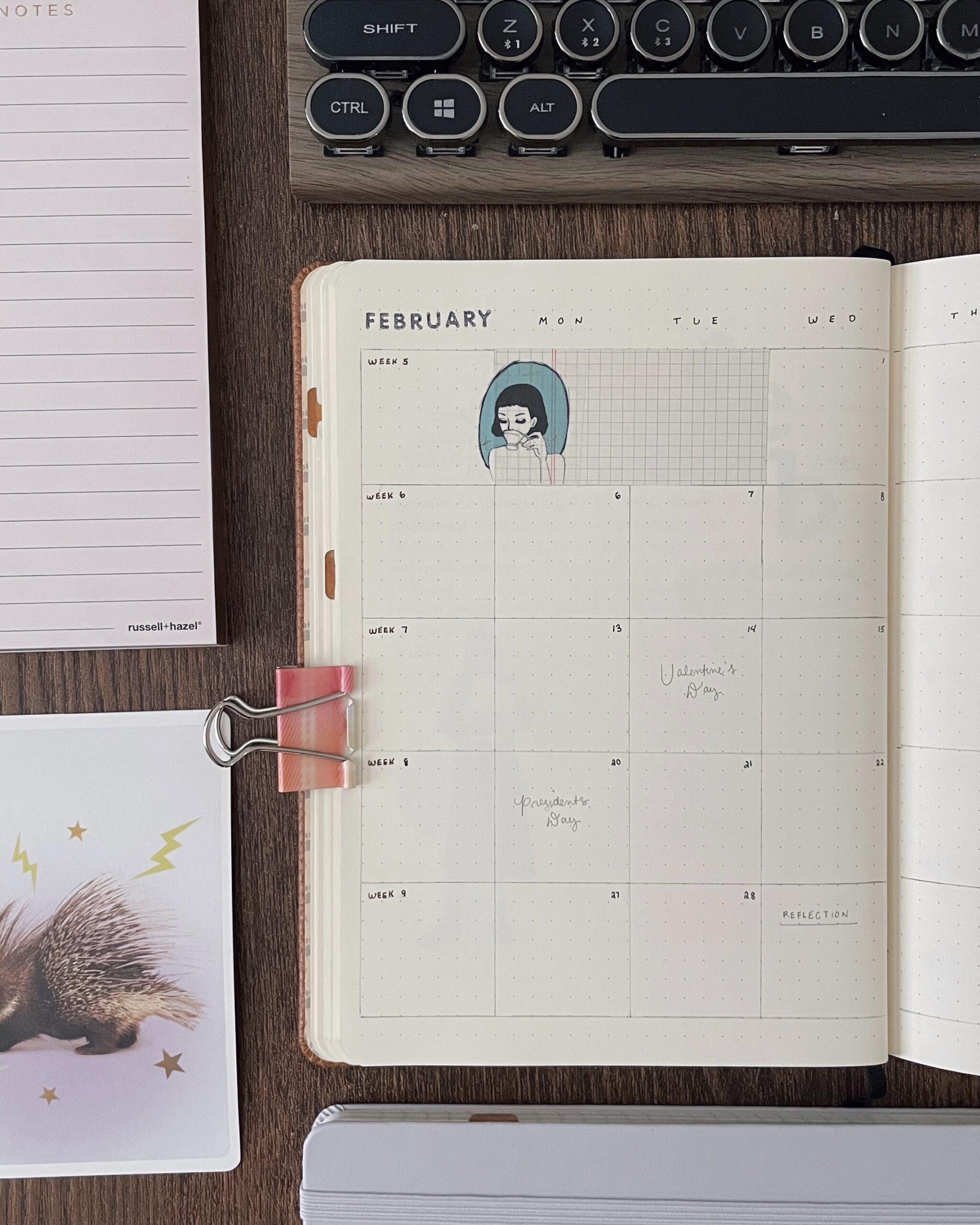
I have been bullet journaling for over 5 years now, and so much has changed in my setup in that time. I’ve experimented with weekly planner-inspired layouts, tried to do monthly themes, and kept numerous collections and habit trackers. The Instagram bullet journal community both inspired and overwhelmed me with possibilities, which eventually led me to where I am today.
The most important thing I realized when trying out various bullet journal setups is that I needed to be honest with myself and what works for me, regardless of what the community was doing. Some things on Instagram look beautiful but just aren’t functional for my lifestyle. I had to silence the likes-driven mindset that often plays a role in our decision-making and get real about what I needed more than anything.
After much reflection, I discovered what I required most were these three things: flexibility, consistency, and plenty of space to write.
For me, that meant quick and easy setups, uniform dashboards that I can recreate weekly and tweak if need be, and a rolling daily log versus boxed-in, two-page weekly spreads. Hell, sometimes I need one full page for just one day! And sometimes I don’t. I can’t predict how much space I will need, so I embraced the freedom of rolling daily logs and literally stopped boxing myself in. I also get bored with things when they don’t challenge or stimulate me anymore, which is why a blank notebook versus a pre-set planner lets me work with whatever layout I want, and experiment as I see fit.
After sticking with the same monthly, daily, and weekly setups for the past 8 months (possibly the longest I’ve ever stuck to a bullet journal system), I began tweaking it a bit this month. Most of the big ideas are still here, with minor adjustments to keep things fresh and challenge me creatively.
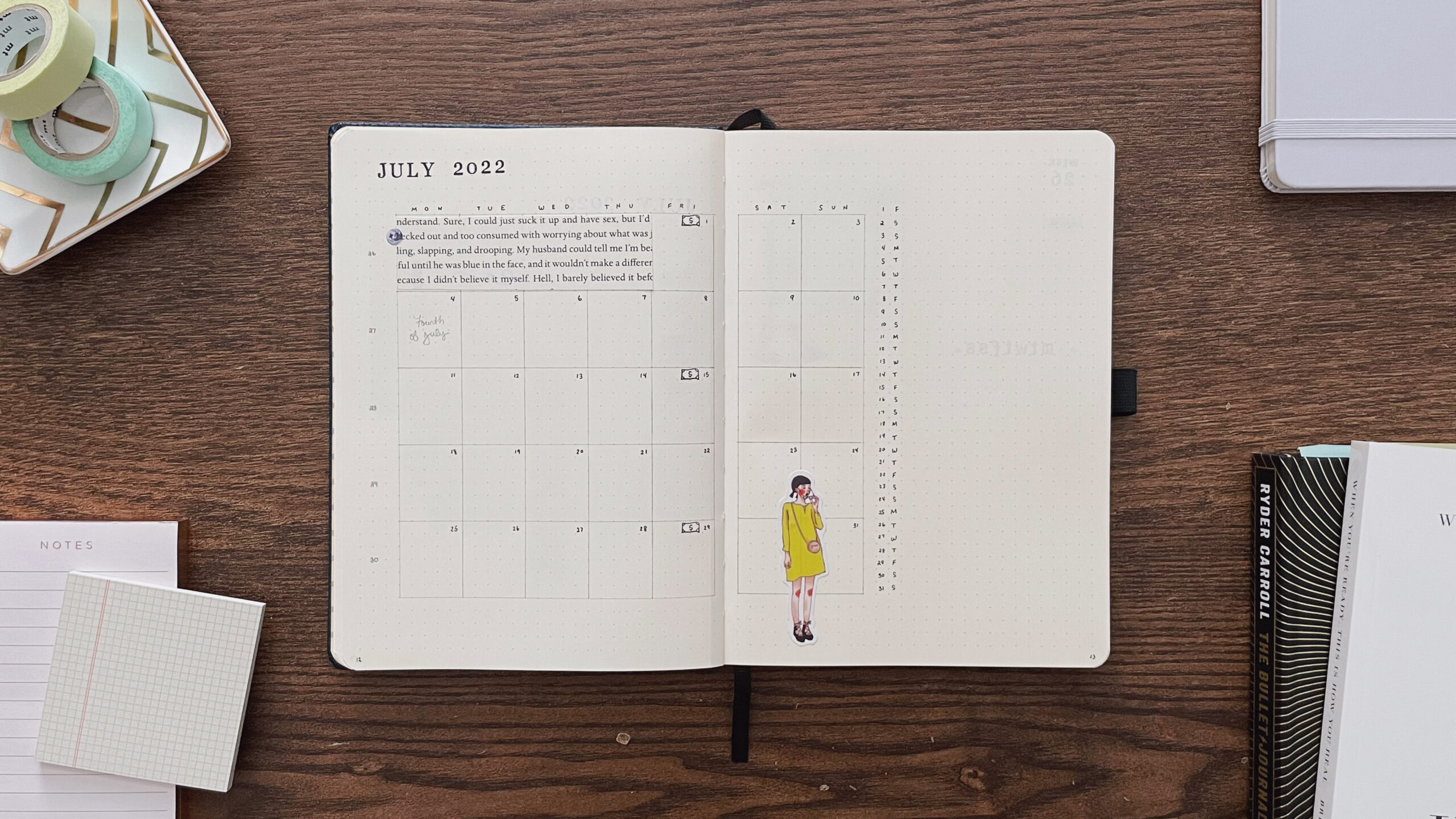
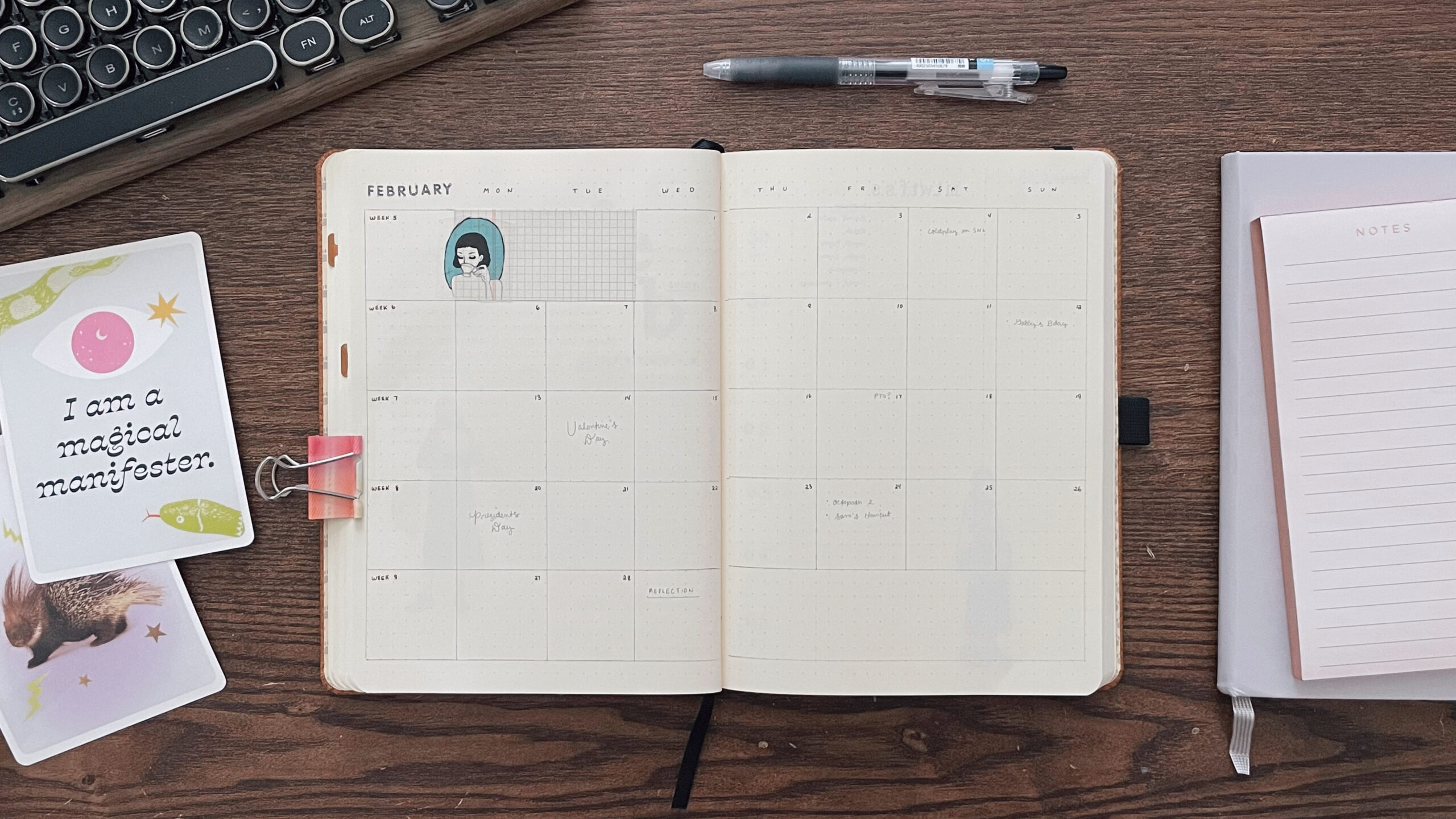
A larger calendar view.
I’m a visual person, so a traditional monthly calendar view is a must in my journal. My previous calendar views were a bit smaller, with room for a short sentence on the right for memories. Now, I’ve made it larger to make more room for decorating and note-taking within the calendar boxes themselves. Since I use this spread as a memory-keeper tool than a planning tool, I don’t ink anything in or reflect on my day until after it’s happened.
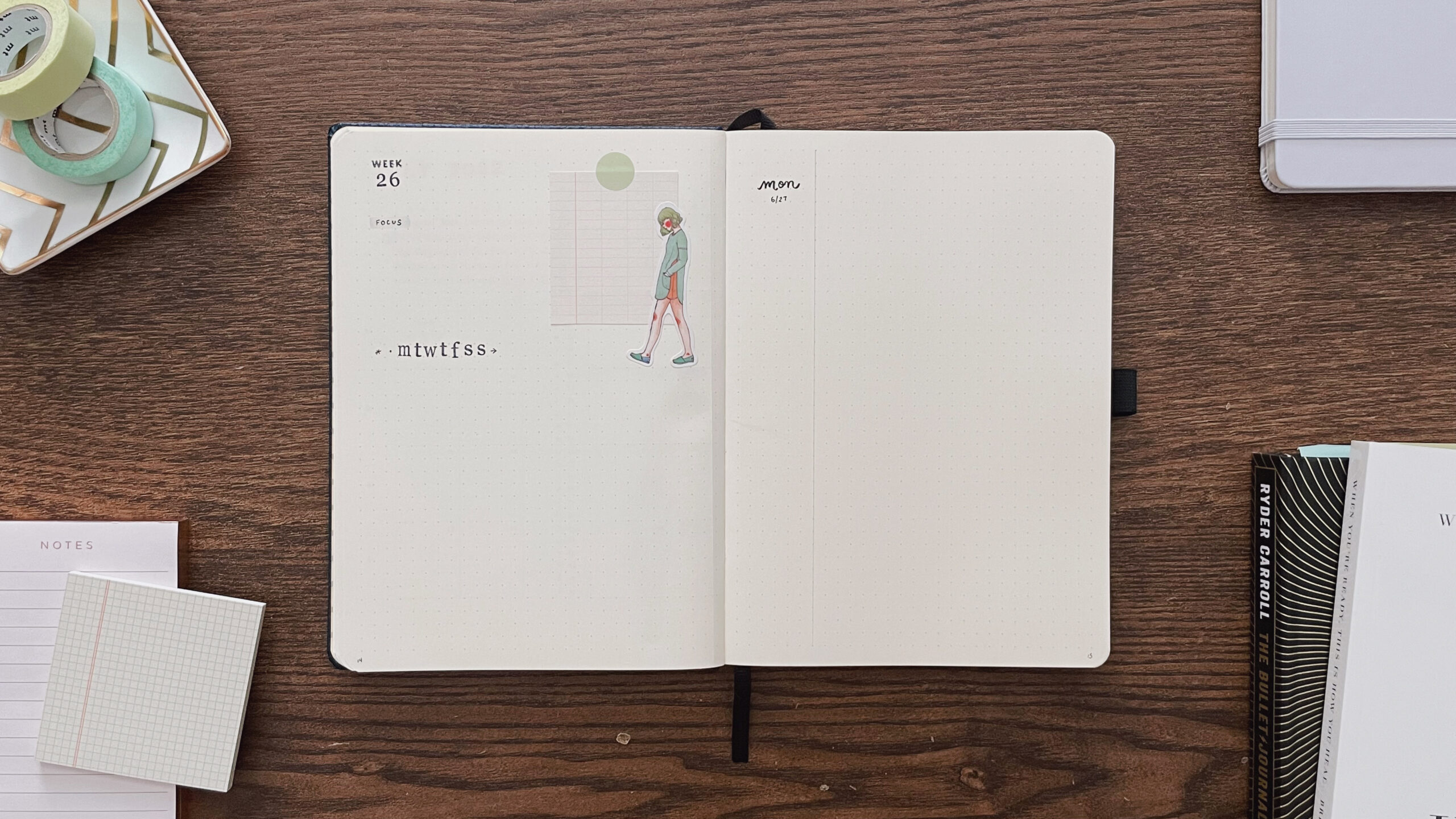
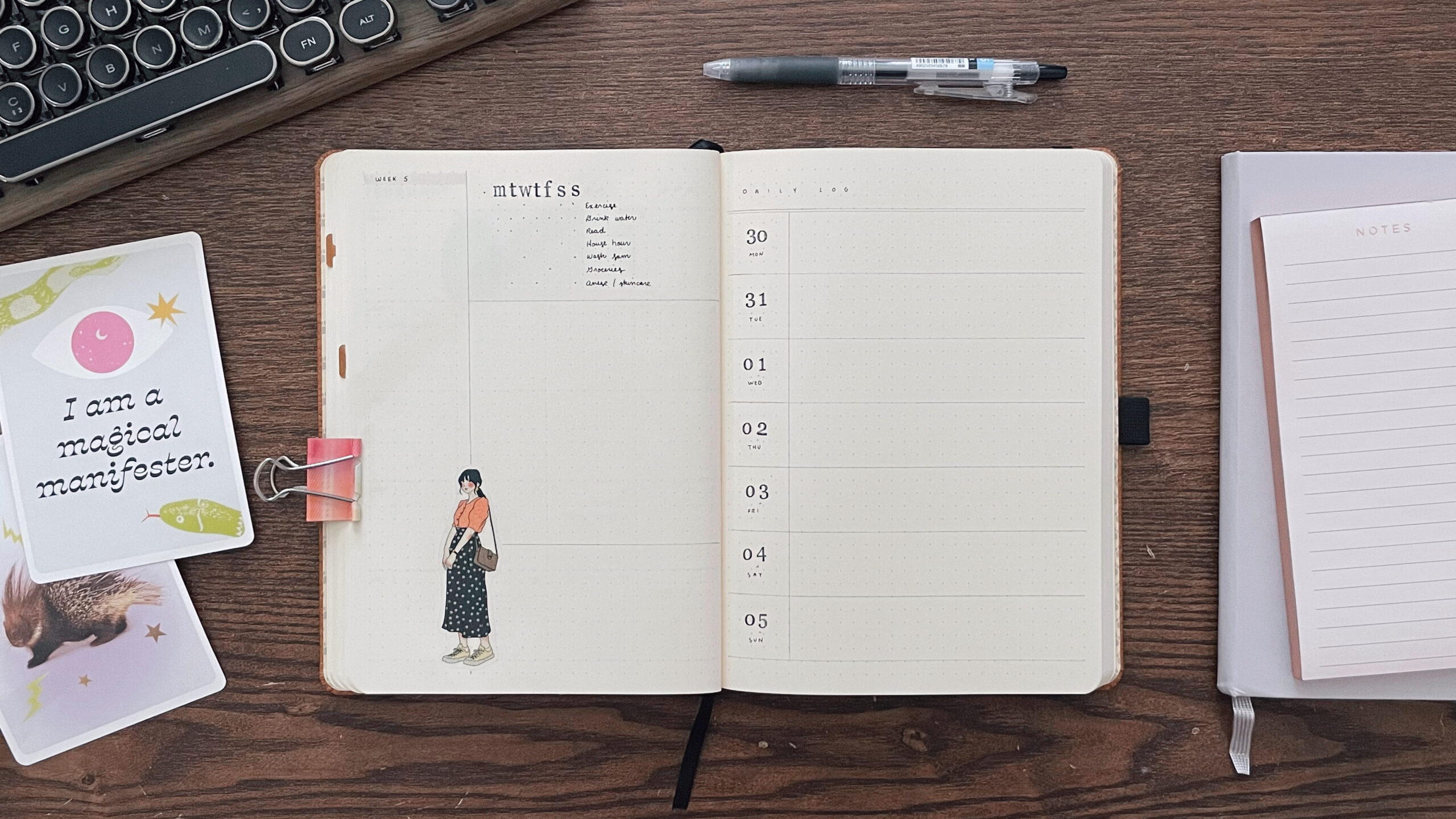
More space on my weekly dashboard.
I’ve been using a weekly dashboard for several journals now, since it’s essential for me to see all my tasks on one page. I still use the Alastair method to schedule and keep track of tasks, but now I incorporated a weekly routine tracker at the top for things like exercising, grocery runs, skincare, etc. I carry these tasks over each week, so I wanted them to stay at the top where I can see them easily, instead of hunting for them among my task list.
Below the routine tracker is space for this running task list, and below that is where I list what I’ve been reading, playing, watching, etc. On the left column is space for my weekly focus and note-taking. I often use this space to note any astrology happening that week that I want to be conscious of and work with, like moon cycles and sign switches.
A new daily log.
My previous daily log used to be located on my calendar view spread. Since I only had room for a very short sentence, I decided to move that log to its own full page, so I could have more room to elaborate. Now my daily log sits beside my weekly dashboard, so I can get a view of the whole week at a glance. It’s been nice to have more space to summarize my day and look back on this later.
What stayed the same?
While I did make several changes, there are some things I’ve been doing for months that are still working for me. I highly recommend trying out any of these setups if you are looking to incorporate more intentional, mindful check-ins within your journaling routine.
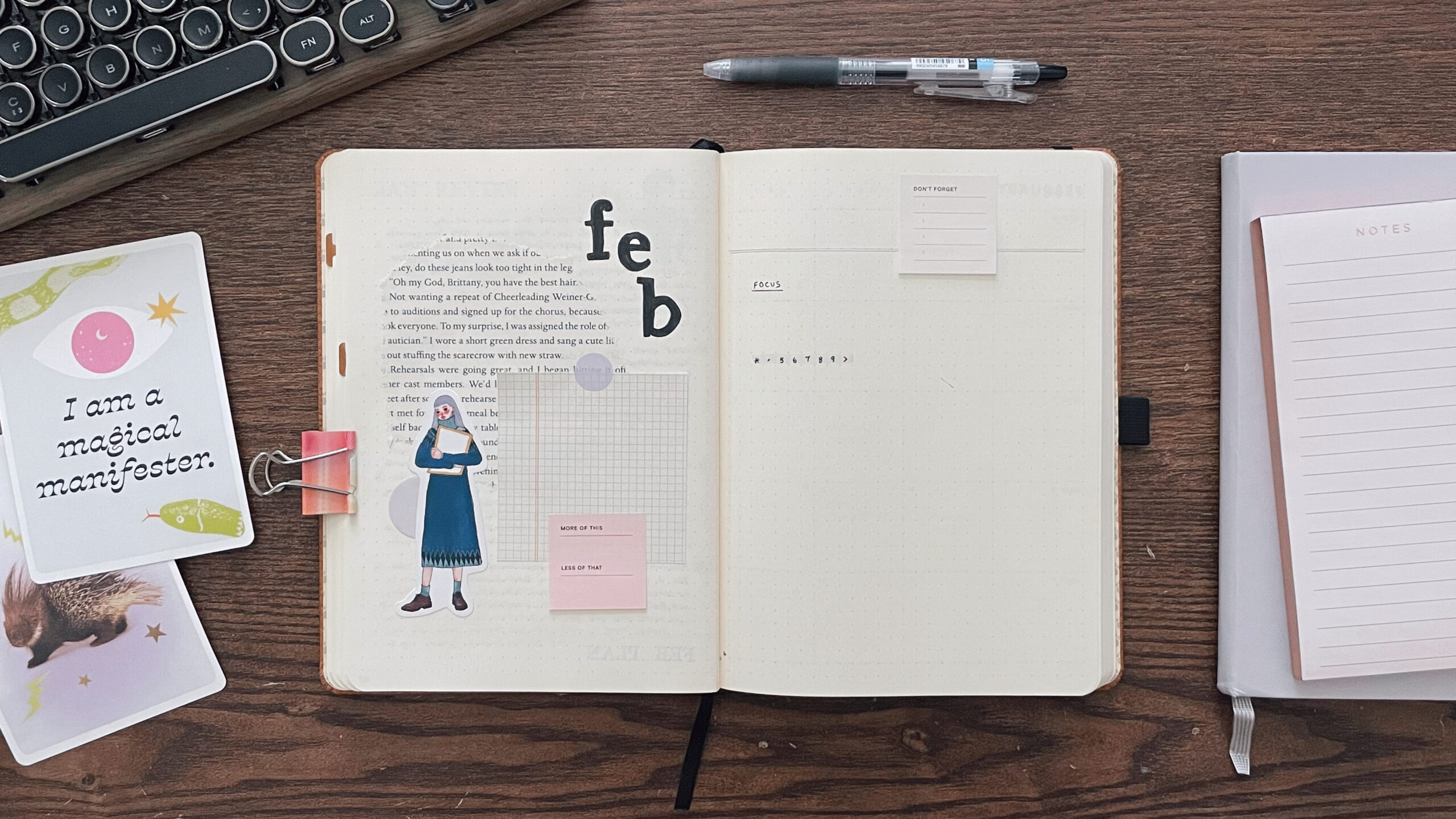
My monthly collage page.
My monthly cover page is an opportunity for me to be creative without taking too much time. I don’t draw or paint in my journal since I use it more for productivity and written entries, but I do like to keep it pretty. Some craft paper, sticky notes, and stickers do the trick.
My Alastair method master task list.
The Alastair method task list is essential for me, since I use a rolling daily log and don’t set up my weeks in advance. When I need to remember to schedule tasks for later in the month, it goes right on my monthly master task list. Then I put a dot in the week I hope to get it done. (In pencil! Cuz “hope”!)
A monthly focus.
Not to be confused with a goal or task, my monthly “focus” is a sentence explaining how I want to feel or what I intend to practice or build throughout the month. I revisit this focus regularly as a check-in with myself. It helps me stay on track with my intentions for the month.
My rolling daily log.
My rolling daily log hasn’t changed in years: I still give myself a margin of about 7 squares for the date, decorations, and notes, and use the rest of the page to list my tasks, intentions, and entries about the day. These aren’t laid out in advance; I just add to them as the days go on and use as much or as little space as I need.
However, one thing I did change is now I write out my intention for the day first thing in the morning. Writing it out and seeing it on paper throughout the day helps me stay focused. At the end of the day, I look back and see if I accomplished it, and then reflect on why or why not.
Remember, your setup is supposed to grow with you.
As you grow in life, so should your setup. Keeping it the same for too long might make you feel bored or lazy about the process, or like it isn’t working anymore. If that’s the case, try to tweak it a little here and there as a way to freshen things up and challenge yourself. That’s the beauty of a bullet journal: you can change it whenever you want. The important thing is to check in with yourself and ask yourself what you need the most from your journal to help you accomplish your intentions and goals.
Have you been experimenting with different setups lately? What has been working and what hasn’t? I’d love to know!






Really enjoyed this insight into your updated bullet journal set-up, Megan! The flexibility of creating new dashboards and pages is what keeps me returning to my bujo time and time again – every day and week and month is different, as is my journal. Right now I use a seven-box table across the top 10 or so dots of a double-page spread to map out weekly appointments and events, and capture my rolling dailies below. Working well for me during this busy season!
Thanks for your comment, Mish! Agreed – the flexibility is what keeps me coming back to a bullet journal versus a planner, for example, since my needs change with the week or month.
I like your idea of having this “overview” space across the top of your spread for appointments and events, since those are the standouts of the week. That way, they’re always in view. It’s cool to hear what others do with their spreads 🙂