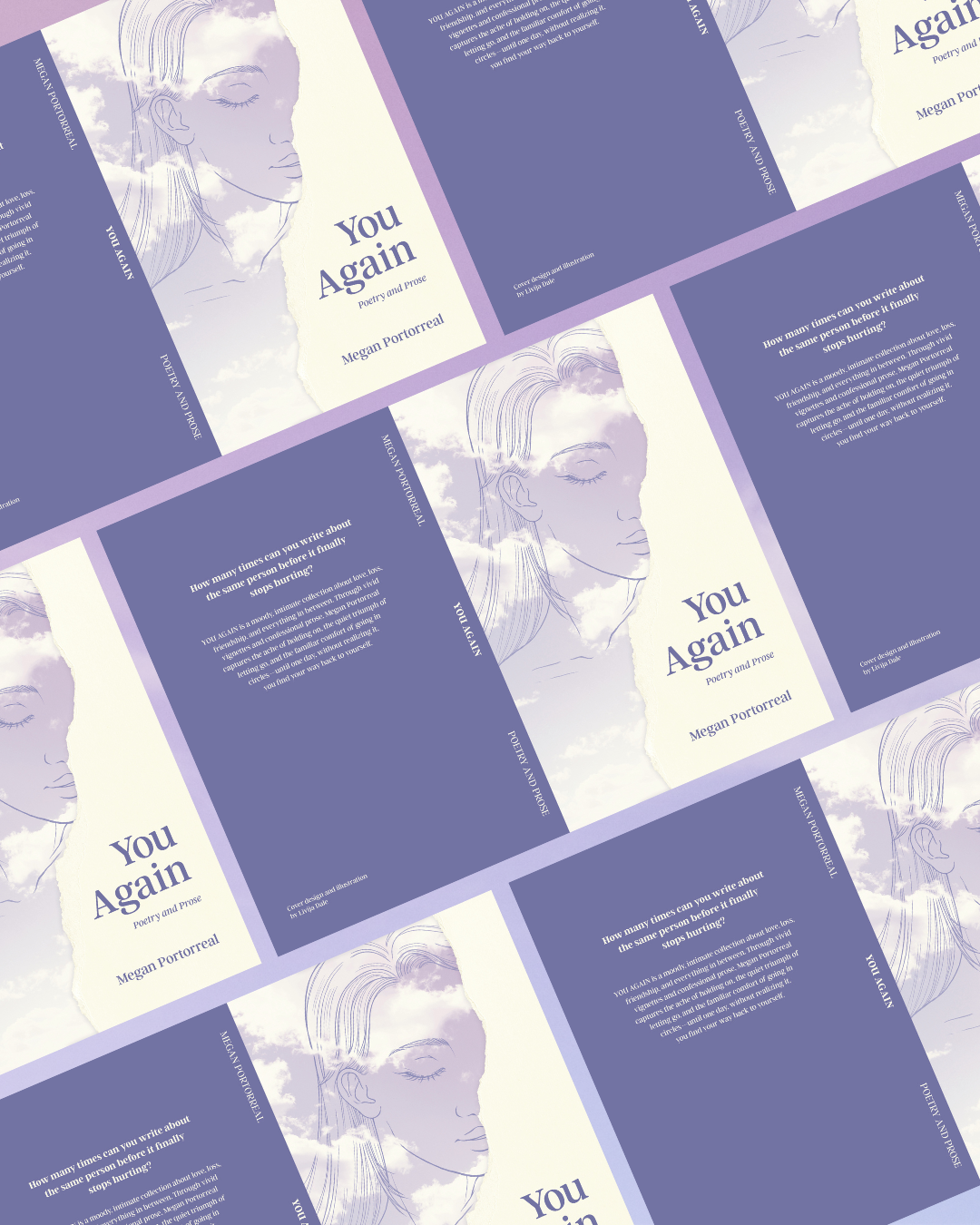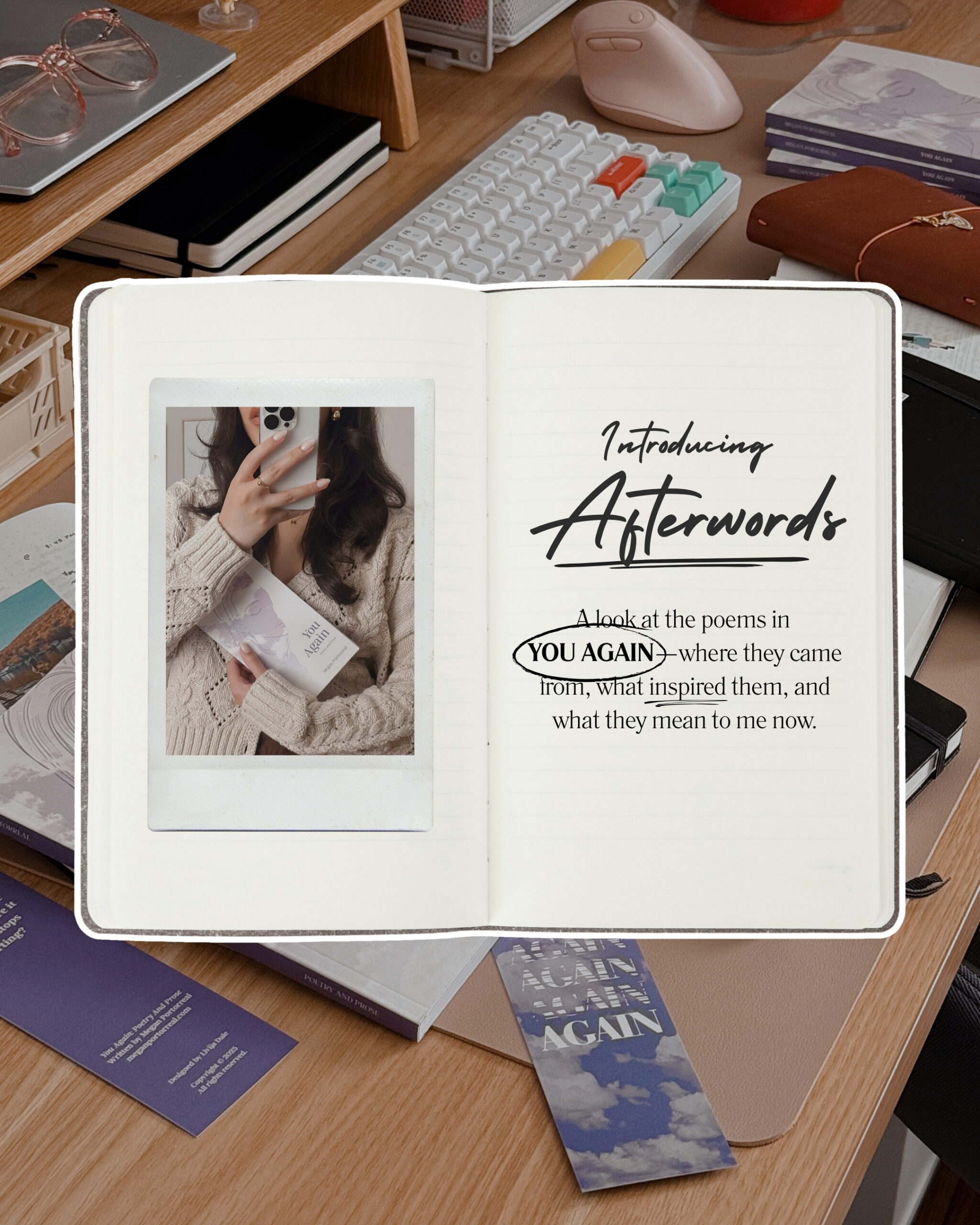
A look at the poems in YOU AGAIN—where they came from, what inspired them, and what they mean to me now. This is Afterwords.
It is my belief that you aren’t a real writer until you’ve pondered your mortality. For a diarist like myself, “A Thing That Bothers Me” is a realization you come to naturally one day, after either watching a film about grief or attending a loved one’s funeral. This realization hit me when I was younger and, half anxious and half wise, I scrawled it down, undated, in the margins of my journal.
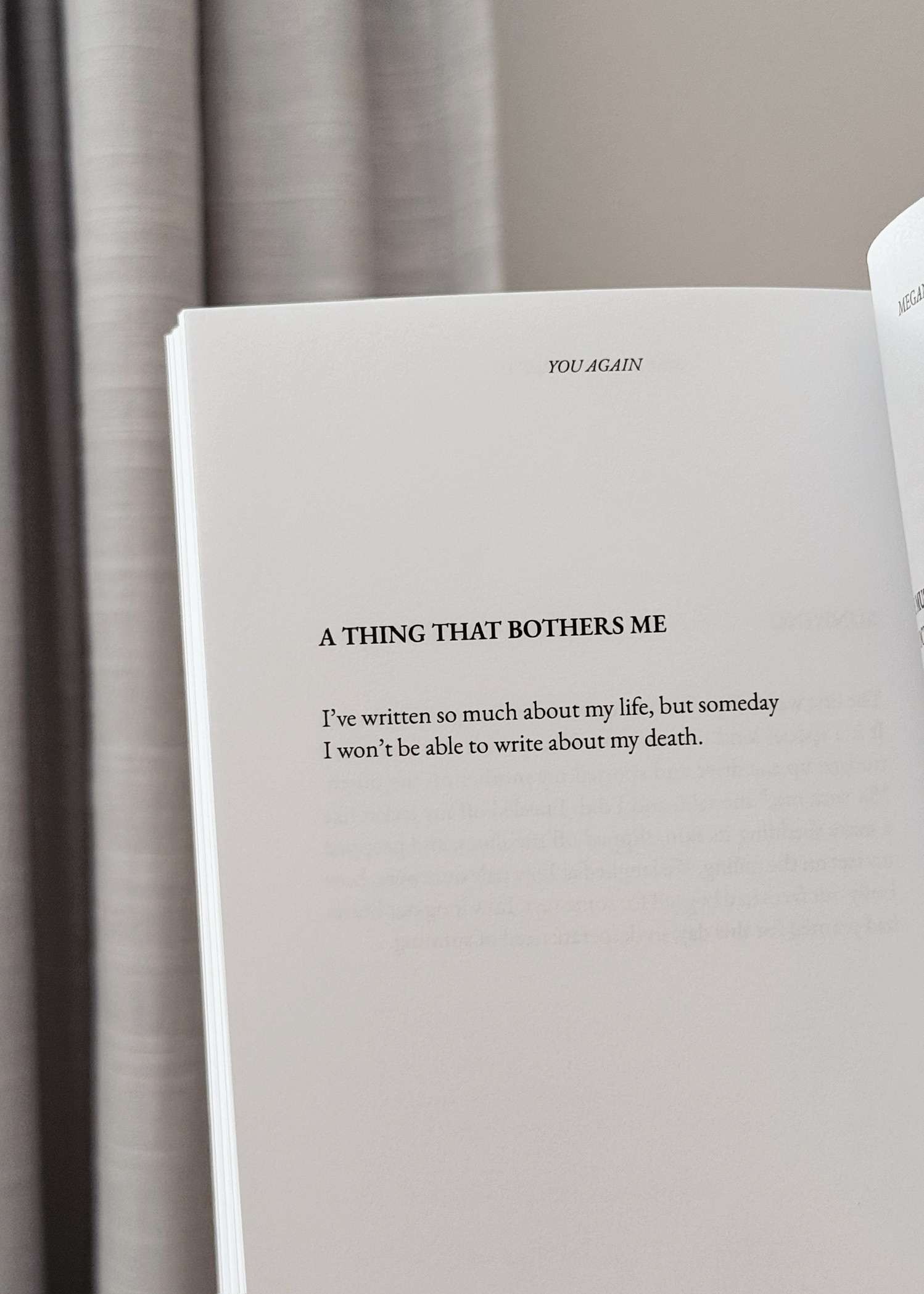
A Thing That Bothers Me

I’ve written so much about my life, but someday
I won’t be able to write about my death.

Megan Portorreal
There is an episode of Gilmore Girls about a treasured family member who dies and their obituary in the newspaper isn’t up to standards. The writer excluded all the philanthropy work this person did, all the money they’ve donated, all the lovely adjectives describing their saintly character. Outrage and demands for a reprint ensue. And I thought, as many other writers have thought before me, When I die, who is going to write my obituary? And most importantly: will they get it right?
Soon after having this thought, I drafted up a short obit for myself—more of an exercise on creativity and less of severe anxiety. Who better to get it right than me? I left blanks to be filled out where applicable, mentioned all the things I’d liked mentioned. Then, after admiring my work, I realized it read too morbidly if found by literally anyone, and held delete until it was gone.
But “A Thing That Bothers Me” isn’t just about obituaries and summarizing a person’s life into one neat paragraph. It’s also about the story of what actually happened, and how. I’ve written so many stories about my life experiences, but the one I will never be able to write about is my death—which is such an important part of one’s life, isn’t it?
A passage that comes to mind is from Tim O’Brien’s book The Things They Carried. In it, the narrator witnesses the death of his fellow soldier (Lemon), but it happens so suddenly, he notes Lemon probably didn’t even realize that he died or how he died. He ponders what makes something true, and how the truth can vary from person to person, experience to experience:
“Twenty years later, I can still see the sunlight on Lemon’s face. I can see him turning, looking back at Rat Kiley, then he laughed and took that curious half step from shade into sunlight, his face suddenly brown and shining, and when his foot touched down, in that instant, he must’ve thought it was the sunlight that was killing him. It was not the sunlight. It was a rigged 105 round. But if I could ever get the story right, how the sun seemed to gather around him and pick him up and lift him high into a tree, if I could somehow re-create the fatal whiteness of that light, the quick glare, the obvious cause and effect, then you would believe the last thing Curt Lemon believed, which for him must’ve been the final truth.” — Tim O’Brien
Life, like death, is all about the truth and what matters. As a writer, what matters to me is getting the story right, at least how it felt for me. How odd would it be to experience death and then write about it after? How lucky? To put pen to paper in the afterlife, then send it out like a piece of fiction to someone still living?
I would beg them to publish it on my Tumblr. It would perform so well there.
See you back here soon for the next poem.
Want To See A Particular Poem Covered In This Series?
If you have a poem from YOU AGAIN you’d like me to write about, please email me at hello@meganportorreal.com. You may also DM me on Threads or Instagram, or leave a comment below.