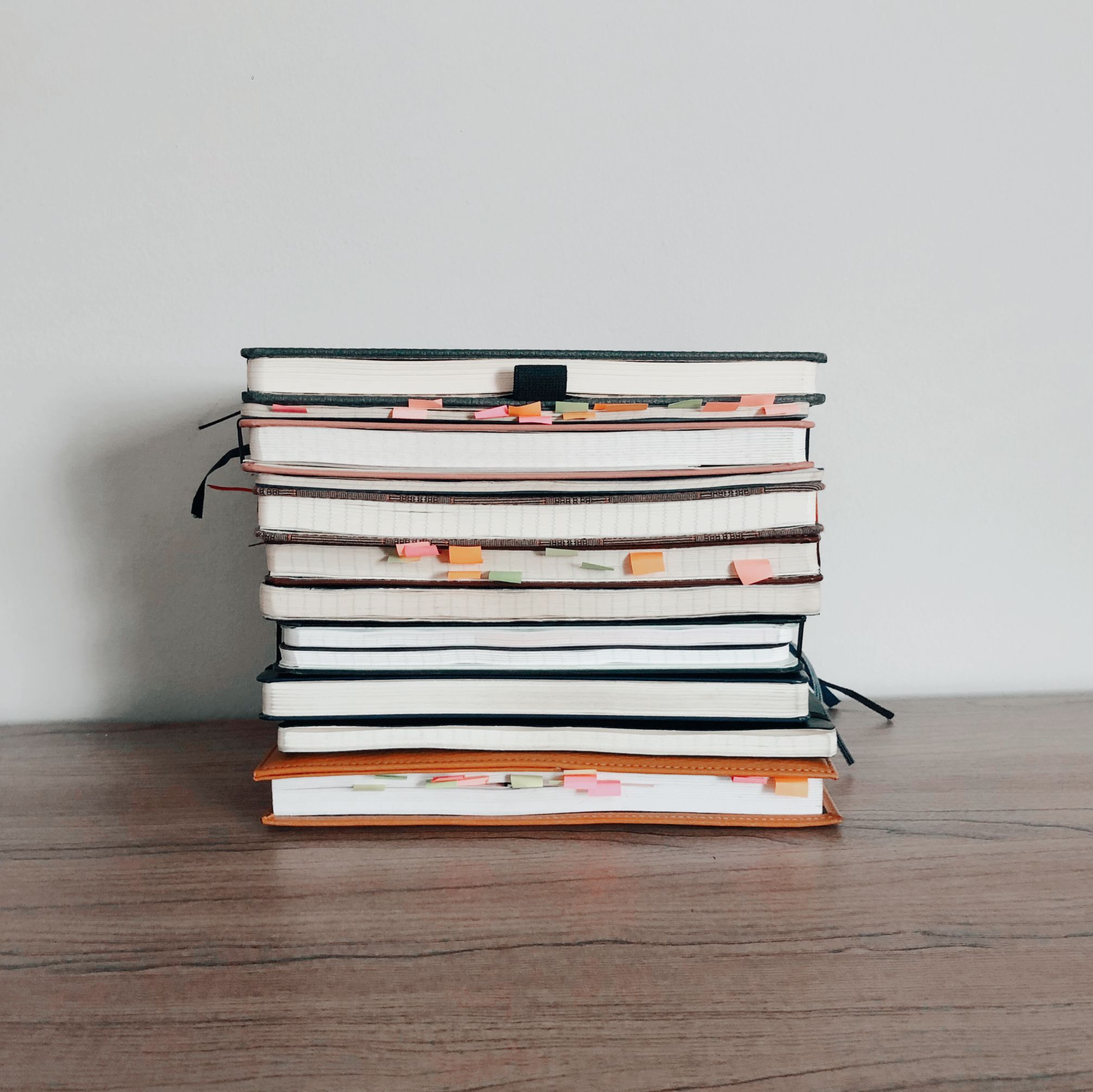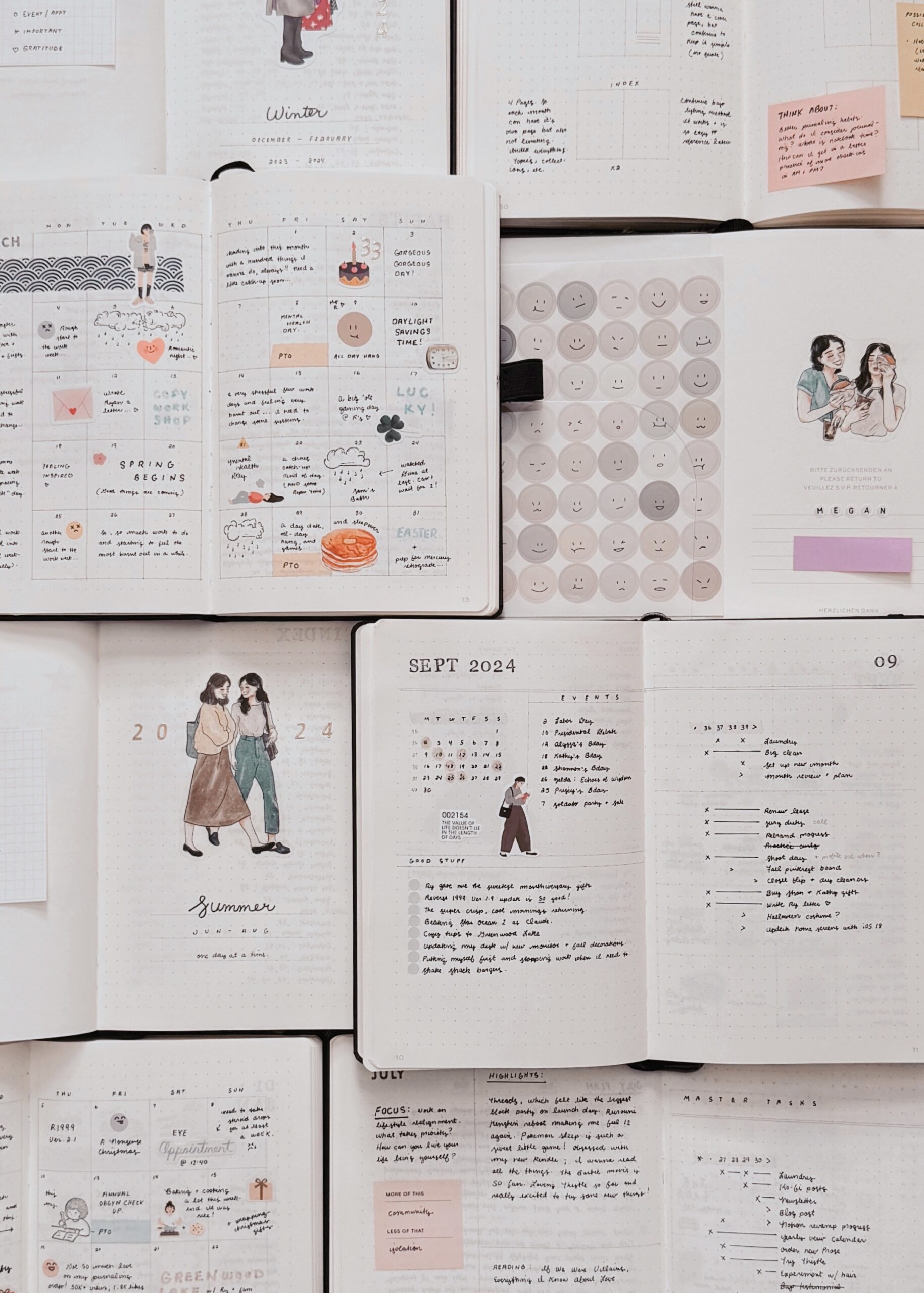
I have been journaling for over 22 years and have accumulated over 30 notebooks. Still, it wasn’t until I started bullet journaling in 2018 that I noticed an intentional shift in how I keep a journal. And it wasn’t until 2023 when I started keeping a seasonal bullet journal that I changed the way I think about journaling altogether.
I don’t know anyone who keeps a seasonal journal. All my online friends and creators I follow only keep yearly books, or move into a new one when they get bored with the old one. So, switching from a biannual notebook to a seasonal one was incredibly intentional and adapted for my needs.
It wasn’t until I accepted that the “usual” or “traditional” journaling/planning method wasn’t working for me. I wrote about this more here, but now that I’ve been seasonally journaling for 2 years, I thought I’d finally answer some questions you all had about my process.
Q: What made you decide to start a seasonal bullet journal instead of an annual one?
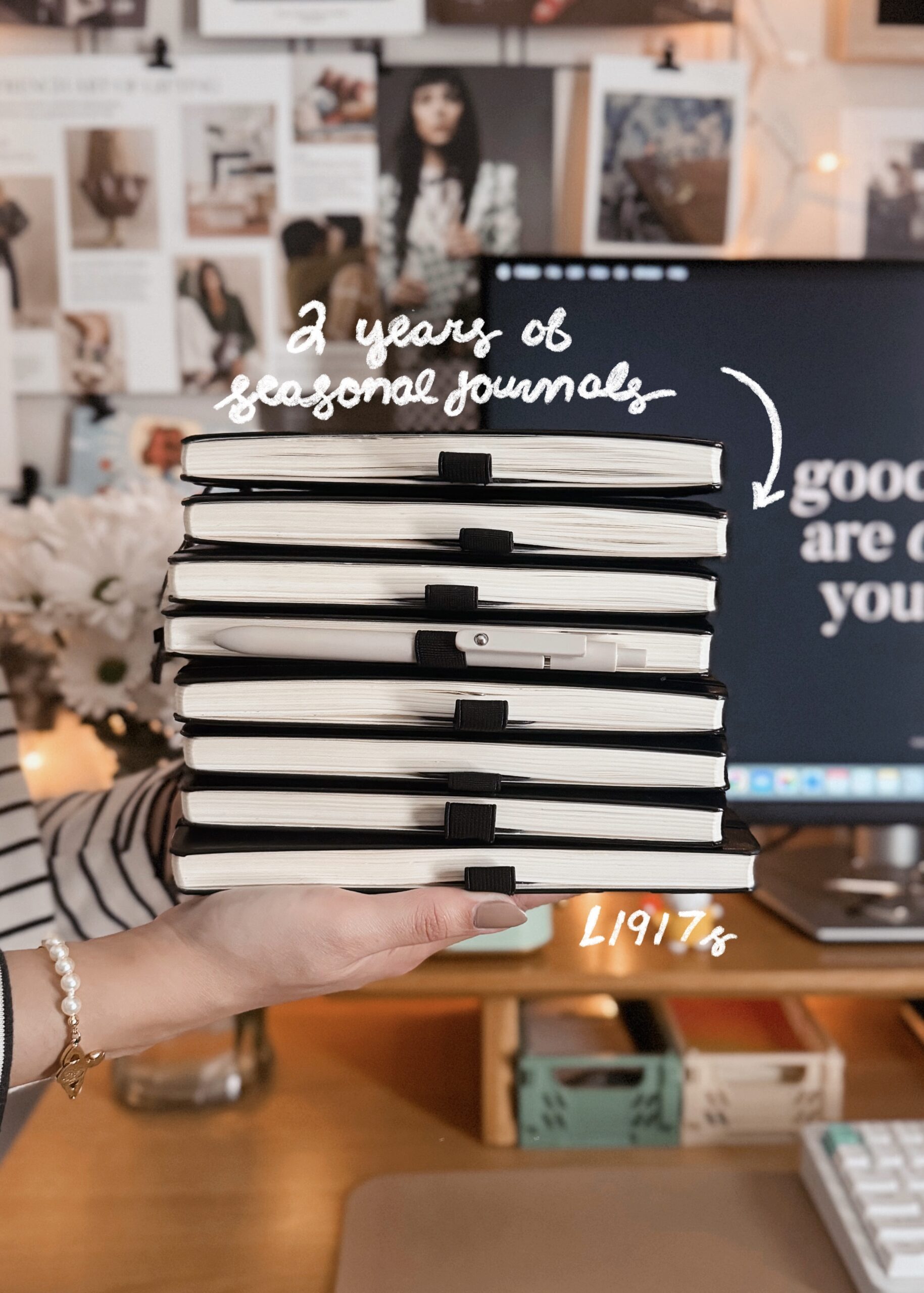
A: Several reasons. 1) I get bored with notebooks quickly and realized combining a bullet journal and a diary into one book would make me fill them faster. I then quickly realized that moving into a new notebook more often kept the practice fresh for me. 2) No one else I knew was posting about seasonal journaling, so it felt like an exciting new angle for me to explore. And 3) I always thought about my life in terms of seasons (most of us do without realizing it), so I thought, why not keep a seasonal notebook, intentionally, too?
Q: How do you choose your notebook for each season?
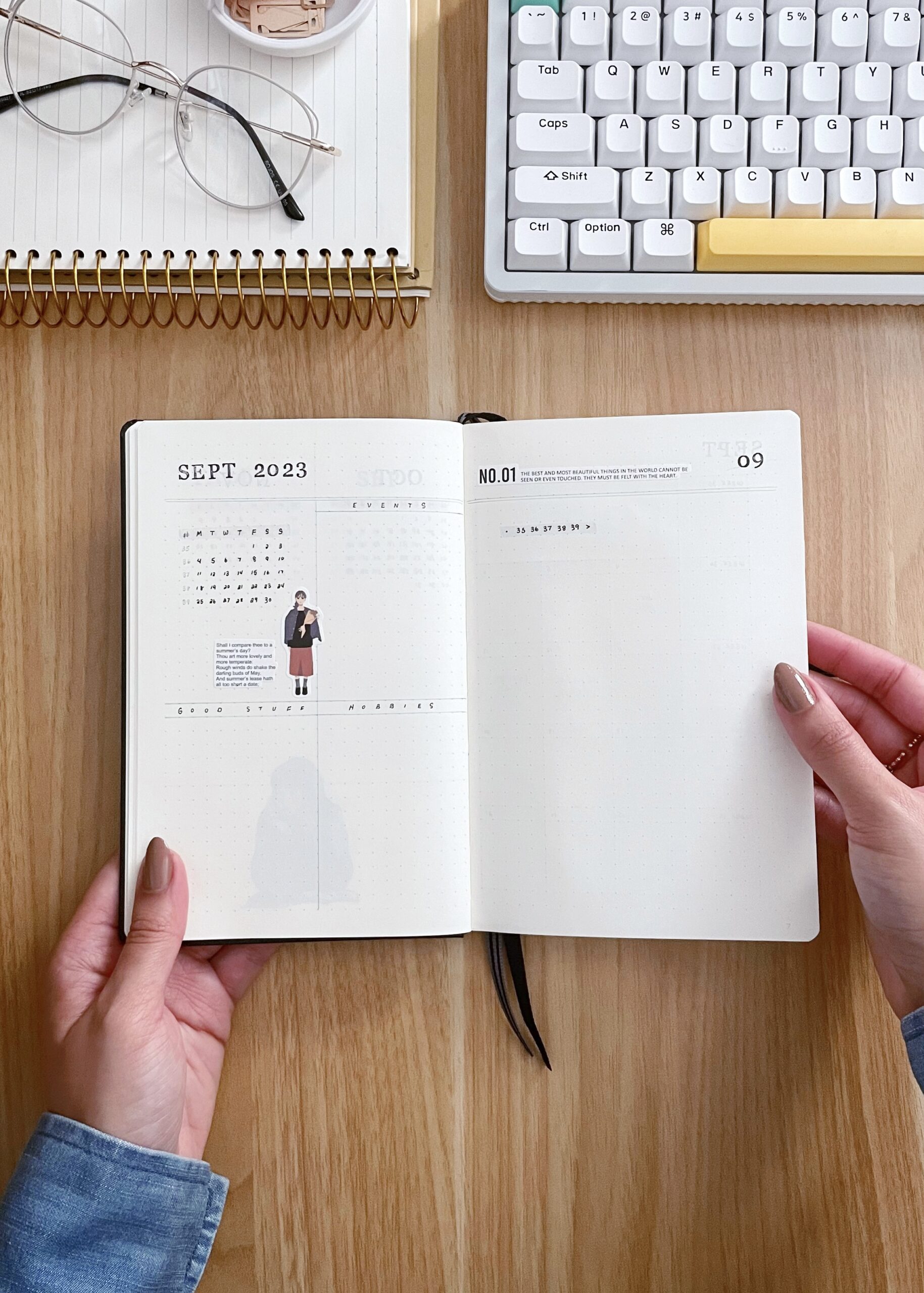
A: I have been a fan of Leuchtturm1917 for many years. I love a hardcover notebook since I write everywhere (even while standing, notebook in hand, hahah), it lies flat, and the quality is remarkable. When they introduced their B6+ size a couple of years ago, I knew I had to try it. I’ve always used an A5 notebook because that is the standard, but B6+ is just a little smaller, with plenty of room for me to set up spreads and add ephemera. It’s the perfect size and I can’t recommend it enough. I use it every season; I like sticking with the same notebook because they look nice and tidy on my shelf.
I’ve tried other books, and here are my findings. Please keep in mind these are just my personal thoughts based on my needs and may not apply to you and yours.
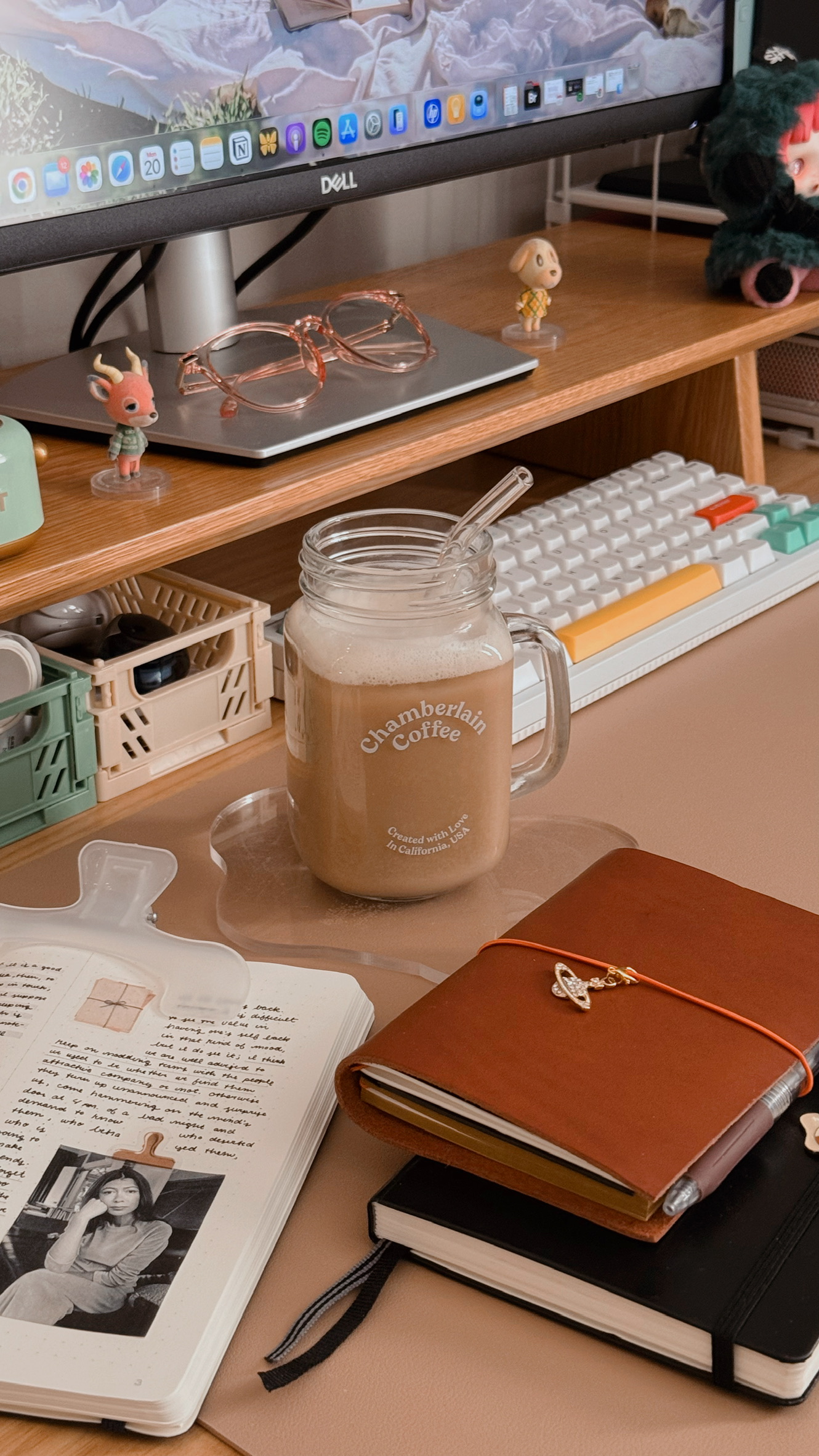
Traveler’s Notebooks: They’re too “fussy” for me. I don’t like the idea of having a lot of little soft-cover notebooks. They don’t lie flat on their own (I want to have my notebook open beside me on my desk, easily flippable without unclasping a clamp), and the size of the pages isn’t ideal for me (I find them too narrow). I’ve heard archiving is a particular problem, and buying a leather cover each time to house old books seems expensive and wasteful to me. It’s cute and works if you travel and want a flexible notebook, but it makes more sense for my lifestyle to keep hard-bound books with 200+ pages each instead.
Hobonichi: I experimented with a Hobonichi this year as my Year Book/memory keeper, but generally, I don’t like the dated pages when it comes to bullet journaling (I recommend going day-free if you want to bullet journal). Dated pages often tend to add pressure to updating them daily as well. The paper is so delightfully smooth, but it’s so thin; my stamps go right through, and any bit of moisture goes through many more pages than an 80 gsm notebook (and they wrinkle easily). Adding ephemera bulks up the book over time and makes it uncomfortable to write on, and you’re “stuck” in it for a year (or half a year). They are gorgeous, but functionally, they are not the best for me.
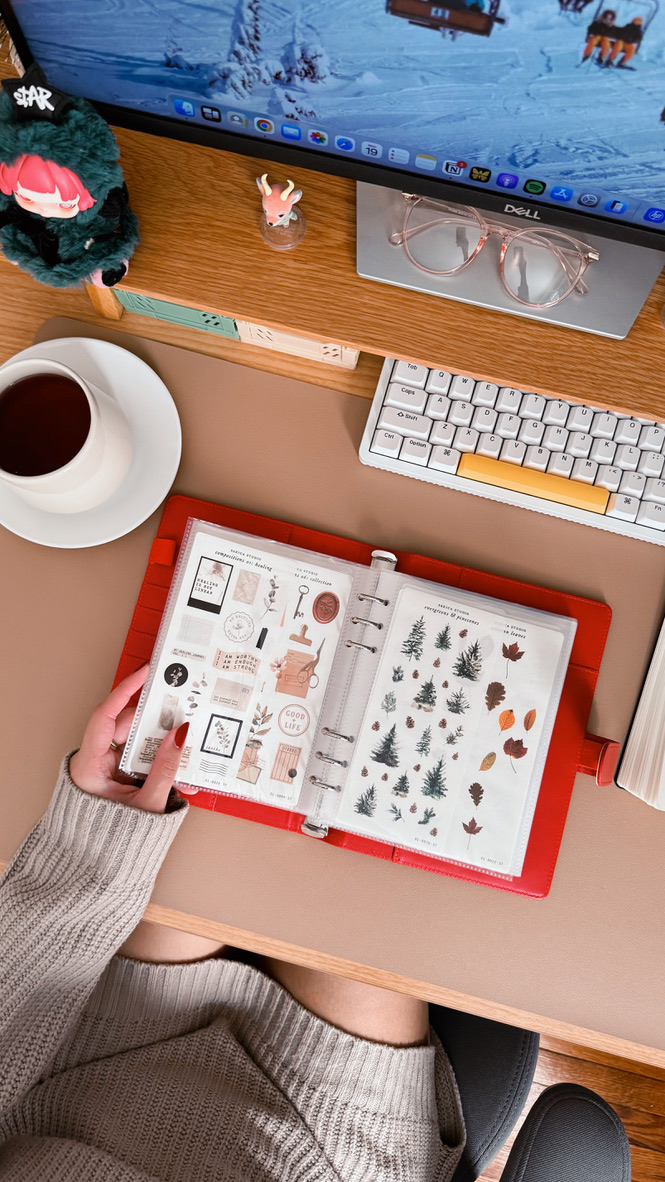
Rings: Any ring planner or notebook is a no for me. The options are endless and have made me overthink it so much in the past. I also don’t enjoy writing since the rings get in the way, and I would rather not take a page out of my notebook whenever I want to write in it. It doesn’t feel as cozy as a bound book to me. I would only recommend it if you like the flexibility. I don’t tend to overthink journaling, though, so the “order” in which things are doesn’t bother me. I index, thread, and bookmark my pages to find everything easily.
Q: What kind of spreads do you always include each season?
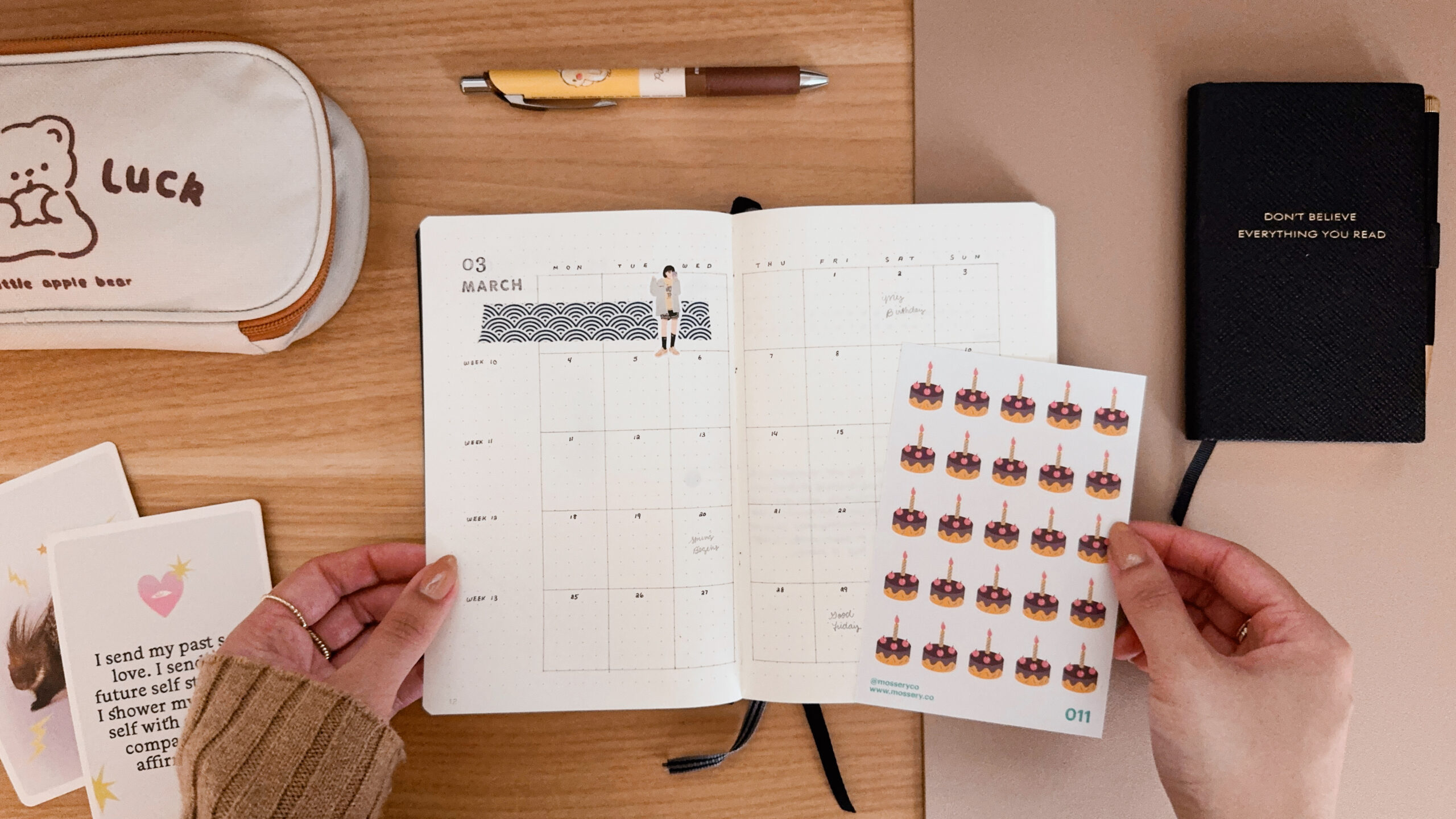
A: I have the following collection pages, in this order: a color-coded index sticker key, a seasonal title page, four blank pages for my Index, a seasonal future log with mini calendar and goals, three big calendar view spreads, a hobby log I call “downtime,” and finally a monthly overview spread with important dates, a running master task list, and monthly gratitude/highlights. Then, each week gets a dashboard, and I use a rolling daily log for journaling.
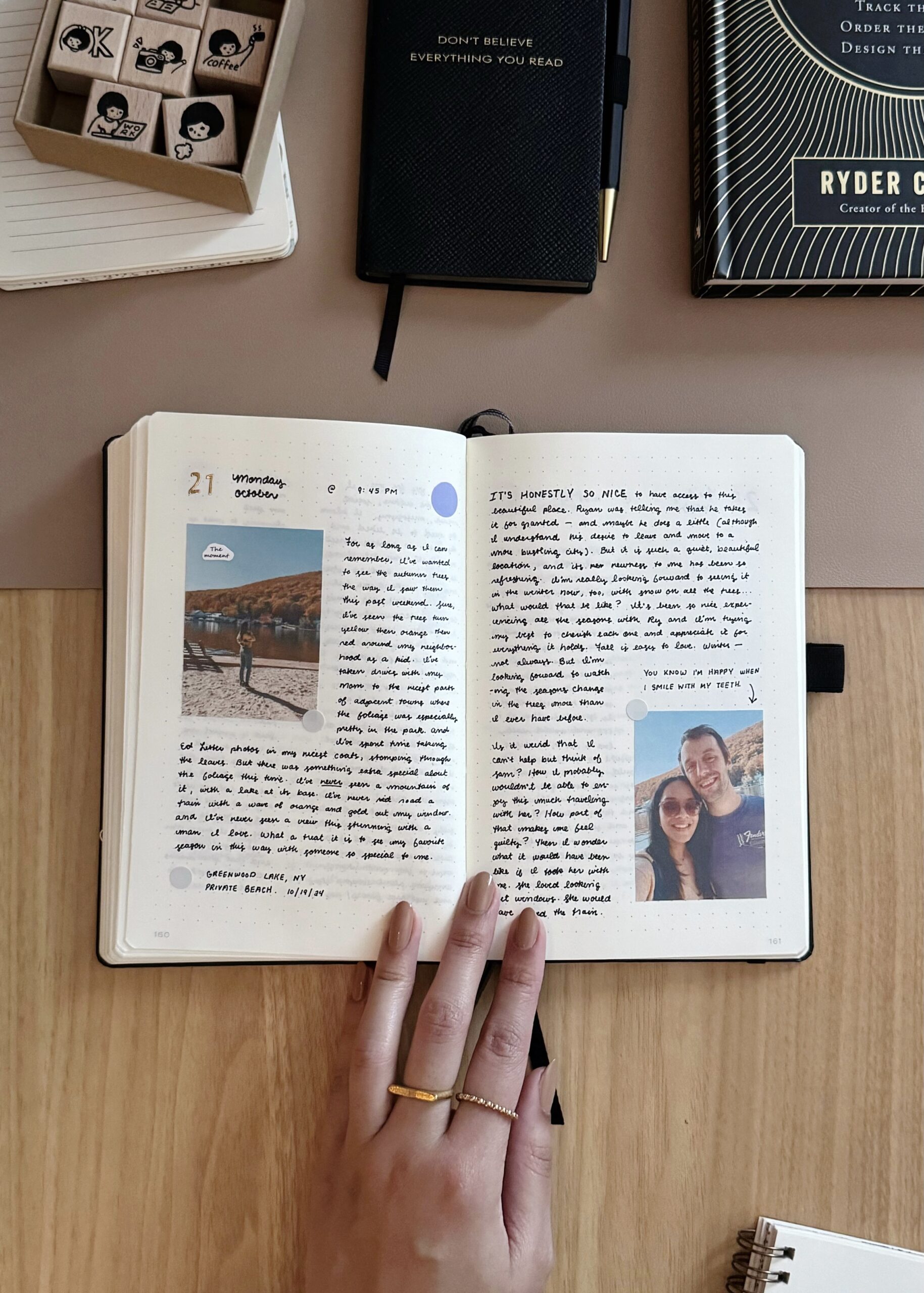
Finally, I flip to the latter half of the book and mark it as my “dear diary” section, where I write long-form journal entries.
Q: How do you know what sections you want, and how many pages are in each section?
A: The above spreads I just mentioned all serve a functional purpose for me. After months of trying new setups and noting averages, I landed on the best number of pages for me. I like to keep things minimal, so I only have collection pages for things I need or want on paper. Other trackers – like budgeting – I keep digitally.
Most spreads are typically two pages long, but my Index is four pages because I index many keywords in my journal, so I can find whatever I’m looking for.
I’ve noticed I usually require at least 50 pages a season for my dear diary section, so I give myself 70 to have a little wiggle room.
Finally, if I want to start a new spread or collection after my initial setup, I add it to the next available blank page, index it, and keep things moving. It’s in there, and I know where to find it.
I rarely fill every page of my notebook in three months, so I never run out of space. No rule says you must fill every page of a notebook before you start another, so if you’re feeling pressure to do so, I recommend changing your mindset about it. It’s not that precious. Your notebook is for you, and you have nothing to prove.
Q: What does the transition between seasons look like in your bullet journal practice?
A: First, I should clarify what my “seasons” are. I start each notebook in the month the season begins. So: my spring book is March–May, summer is June–August, fall is September–November, and winter is December–February. This seems obvious, but it also means I don’t start a fresh notebook in January when most people do. Just something to note.
At the end of every season, I reread and reflect on the pages of my bullet journal and diary. I jot down things I may have forgotten, bookmark passages I want to add to Notion, and note any recurring themes, similarities, or struggles over the past 3 months. Then I take mental inventory (three columns: what I’m working on, what I should be working on, and what I would like to work on in the future) and use these findings to set up my goals for the next season. These tips can be found in the book The Bullet Journal Method, by its creator, Ryder Carroll.
Then I set up my new notebook. I have a very minimal setup, and it has changed slightly over the years, but I recommend viewing previous setups and posts for an idea of how I organize my books:
My January-June 2023 Setup
Mindful Changes I Made To My Bullet Journal Setup
Moving Into A Seasonal Bullet Journal
My Spring 2024 Bullet Journal Setup — the closest to my current setup
Q: How much time do you spend setting up a new seasonal journal?
A: Since I have a pretty minimal setup, it takes about 3 hours. I usually split this into two sessions. First, I pencil in all the spreads I want and the three calendar pages for the seasons. Then I ink them and lightly decorate. I add stickers and notes as I use the notebook, so most of the setup in advance is just the function for each page.
On Sundays, I set up the week ahead. Each weekly setup contains a “dashboard” of my recurring habits and task list, content tracker, and weekly focus. This takes me about 30 minutes to set up. Then, I reflect on the past week and write down what I want for the new week for about 15–30 minutes.
Q: What are the most significant benefits you’ve noticed from switching journals every season?
A: You know that wonderful feeling when you start a new notebook, typically on January 1, and you are filled with purpose, hope, and possibility? I get that feeling every three months. Keeping seasonal journals feels like a fresh start every quarter. You don’t have to wait a year for a “new you.” Each season is special and unique to me, so when the seasons change, my goals change too. I need to reflect on the passing of time and then realign my goals with that growth.
Plus, over time, I’ve learned to set manageable and bite-sized seasonal/quarterly goals that are better for me than setting lofty yearly goals. Yes, I may have a goal for the year in mind (example: my goal for 2025 is to self-publish my debut poetry & prose book), but my seasonal goals are a lot more specific. Spring may be dedicated to revisions and implementation, summer to marketing plans, and autumn to the launch, etc.
Q: How do you keep up the daily journaling discipline?
A: First, you need to define what “daily” and “journaling” mean to you. Is “daily” 10 minutes, or 30? Is “journaling” one paragraph or one page? Is it more?
I write in my bullet journal section daily. Every morning, before or after breakfast, I sit down, open my notebook, and review my weekly task list. Then I write one paragraph about how I feel and what I want to accomplish that day. This sets the tone for my intention for the day, and I often revisit this paragraph throughout the day to see if I’m on track.
Then I write my to-do list for the day by migrating tasks from my weekly dashboard. Throughout the day, I may add notes about my progress, the astrology, events, or conversations that may have happened.
I do not write in my dear diary section every day. I try to write long-form journal entries 2–3 times a week. Sometimes I write more, sometimes I write less. There are no rules.
I keep up with daily bullet journaling because I made it a ritual over the years. It is something I do in the morning, revisit around lunch as a break from work, and then again in the evening to check in with myself. Once you make it a part of your routine, if it is something you want to do for yourself, it will be pretty easy to do it daily. If you’re finding it challenging to keep a daily practice, maybe it’s just something you don’t need to do every day, but every other day. Or perhaps it’s because your practice isn’t simple enough. Don’t force it. No rule says you have to journal daily to have a journal.
If a daily journal feels aspirational and impressive to you, and it’s something you want to try, I’d suggest starting small (one paragraph a day) and adding it to your morning or evening routine to keep up the practice. Set an alarm or a reminder if you have to.
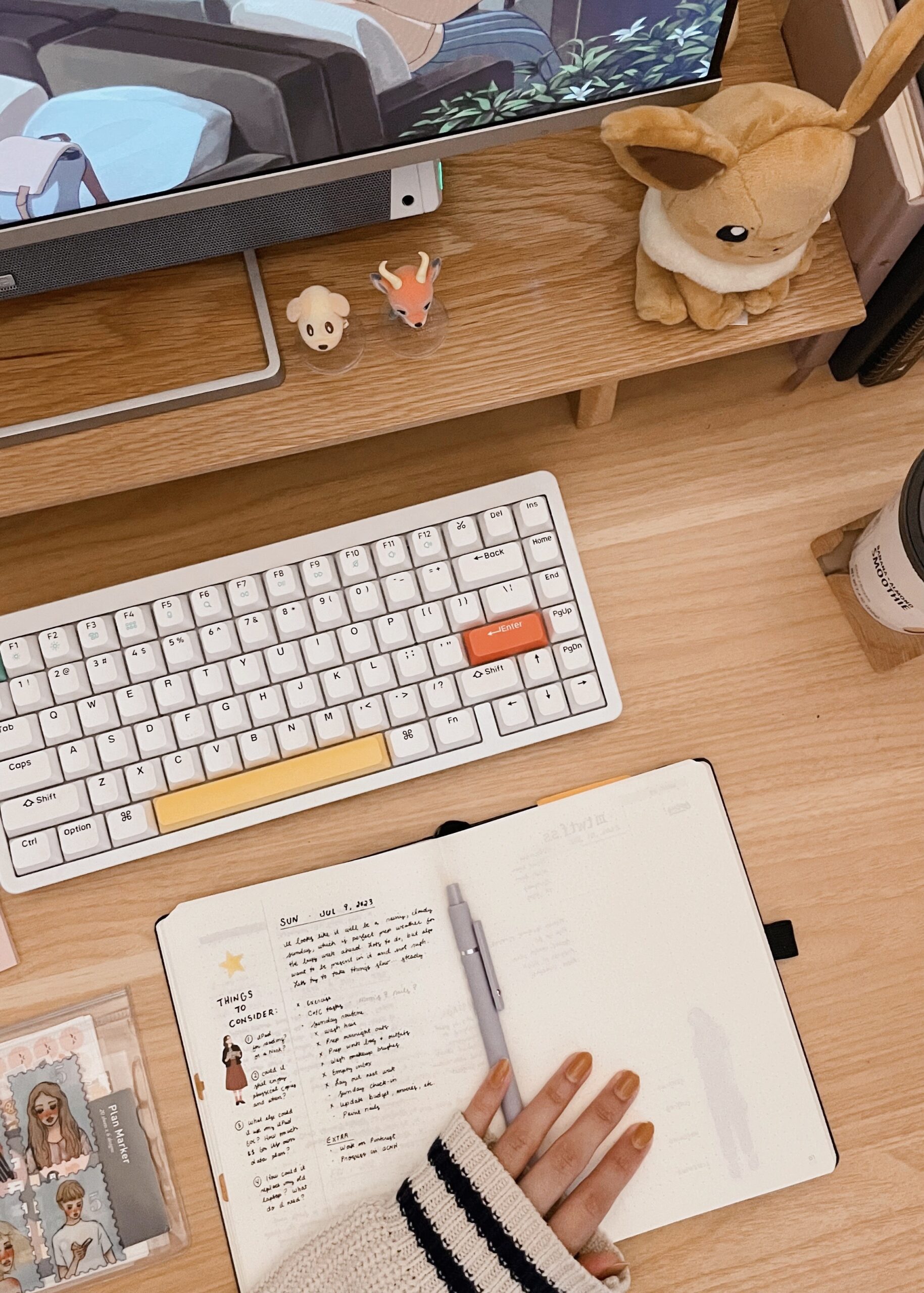
Q: Any tips for someone who wants to start a seasonal bullet journal but feels intimidated?
A: Start with a minimal setup like mine, or even simpler. It doesn’t have to be gorgeous or colorful. I have very minimal supplies: pens, pencils, erasers, a ruler, stickers, and stamps here and there. Some ephemera for memory-keeping. I don’t draw or paint. I just write. This helps make my practice more manageable, more about the function and less about the decoration.
Keep it simple to start (or forever), and remember this book is for you, not for the Internet. If you’re doing it for Instagram and not for yourself, it may feel like a chore. Then, once you get more comfortable with your practice, add things to it. Experiment. What works for me or someone else you follow might not work for you. And that’s okay. You won’t know until you try. So ditch the perfectionist mentality, forget about filling every page or going viral, and do this beautiful thing for yourself.
Noteworthy Links
I film my finished notebooks on Instagram. Check out some recent favorites below to see what my completed notebooks look like:
Reel: My Winter 2024-2025 Archive
Reel: My Autumn 2024 Archive
Reel: My Summer 2024 Archive
You can also support me on Ko-fi to unlock exclusive posts, chatty vlogs, notebook brainstorms, completed calendar spreads, and more.
I hope this helps! Got a question I didn’t answer here? Let me know in the comments below.