
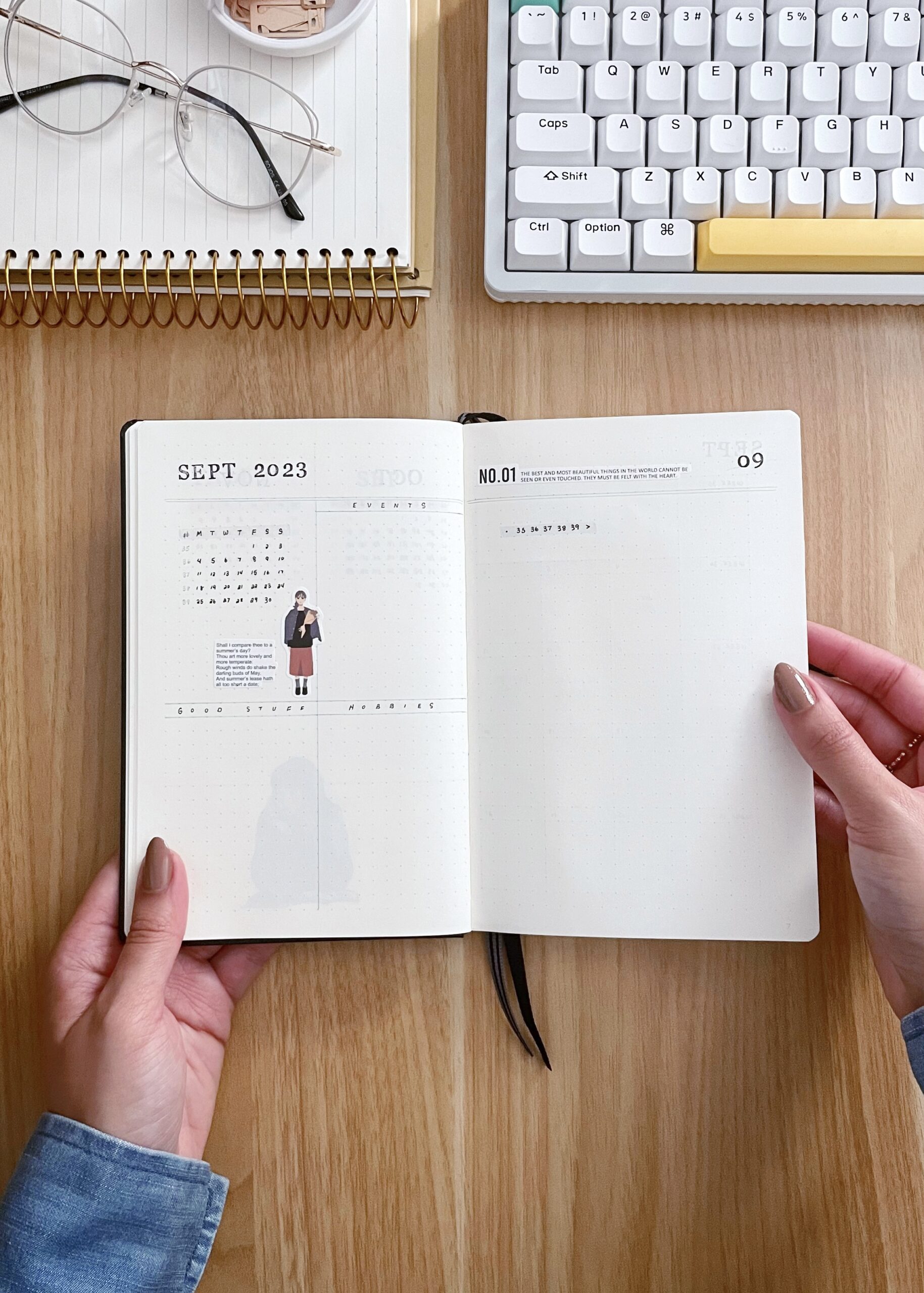
After trialing a seasonal bullet journal for the summer, I knew it was something I wanted to keep doing. There are a ton of reasons, from my need for more frequent “fresh starts” to encapsulating an entire season in one notebook. But most of all, I just love thinking and planning in terms of seasons. A year feels too long, too broad. A month, too short. At this point in my life, a seasonal notebook feels juuuust right. Let me show you my setup for fall.
The Notebook
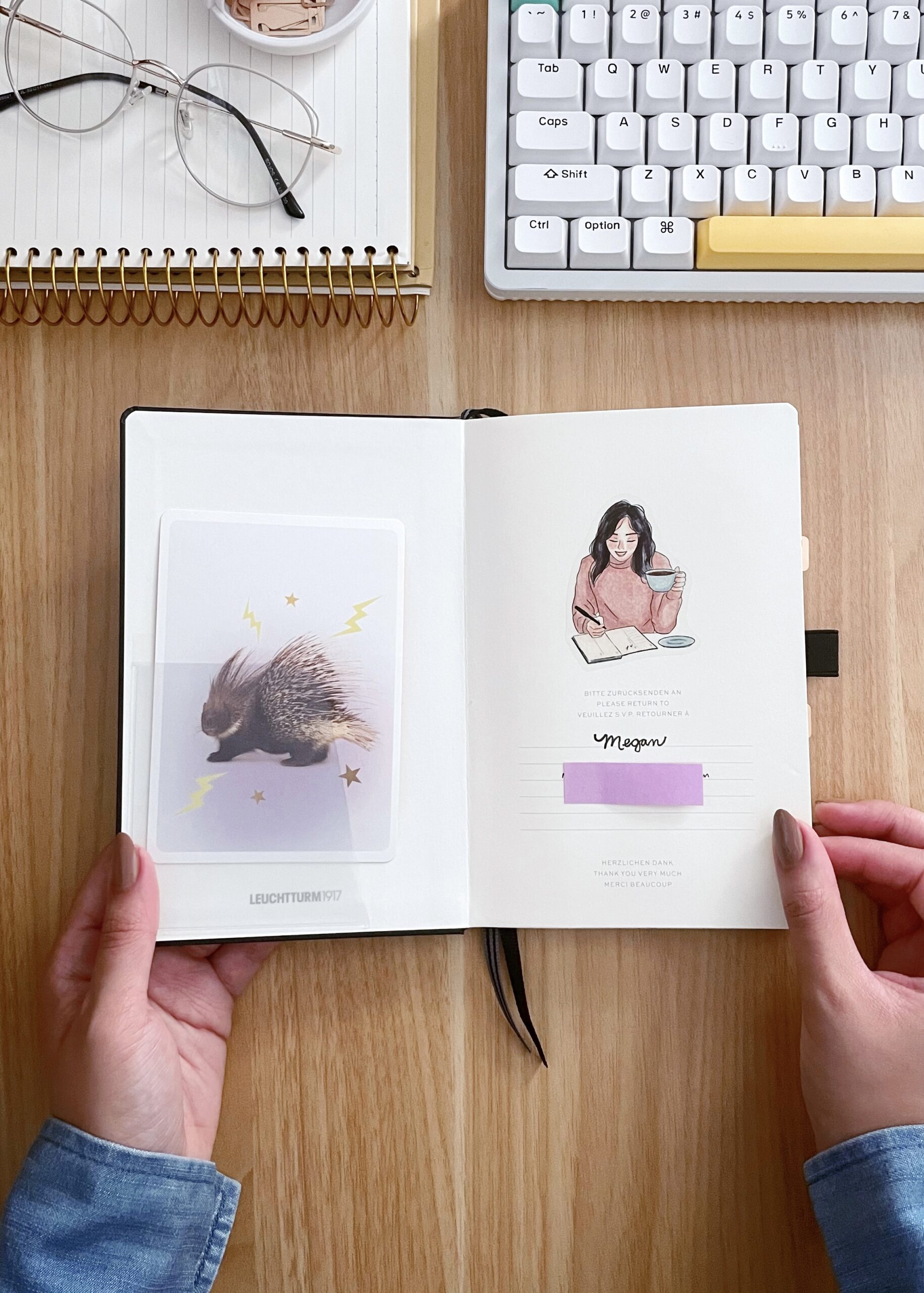
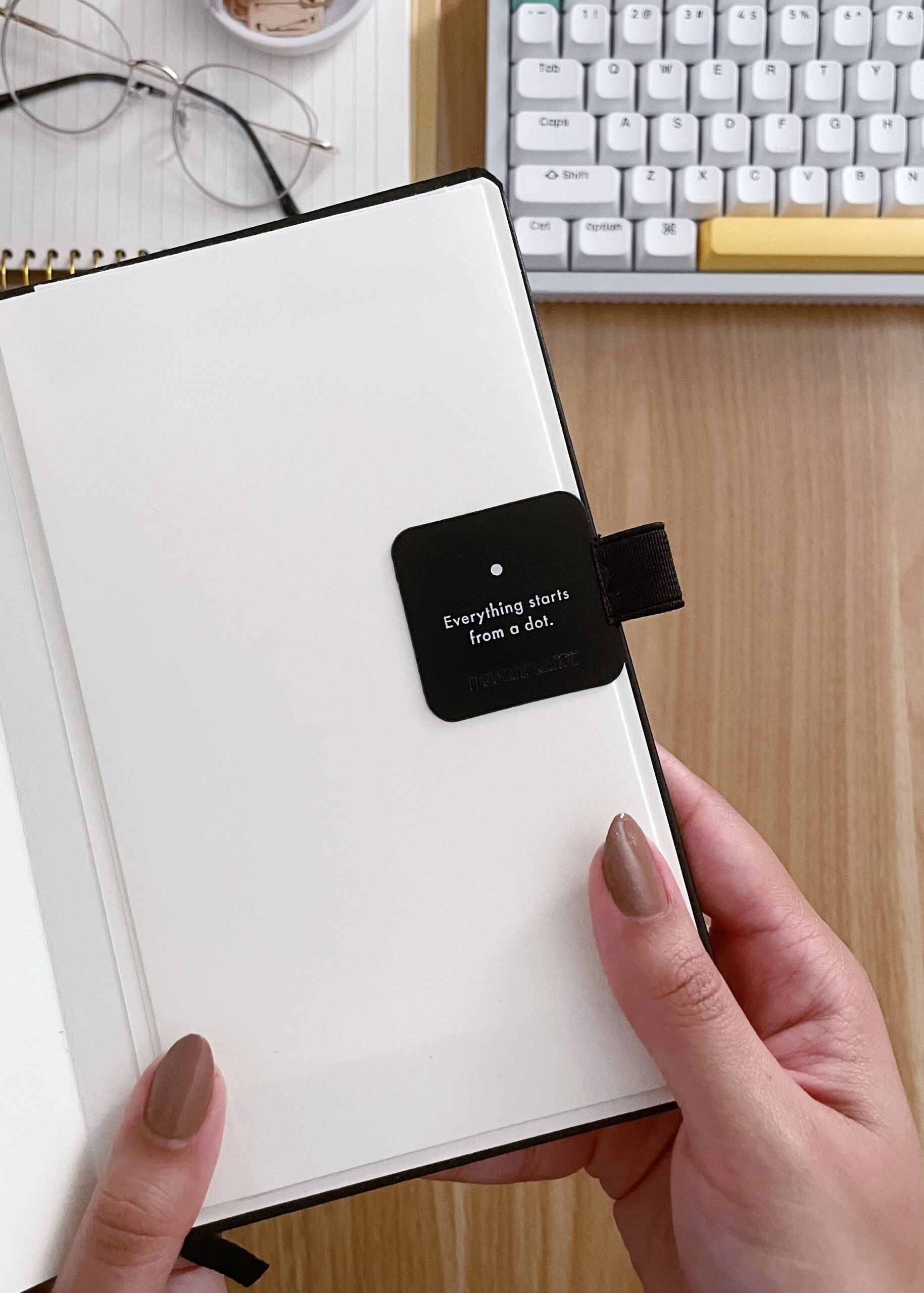
Something else that felt just right was moving into a slightly smaller notebook. I’ve used traditional A5 notebooks for journaling forever and was itching for a change. An A6 pocket size notebook is far too small for me and my lengthy journaling sessions. But the B6+ size is the Goldilocks of notebook sizes for me. My favorite notebook brand, Leuchtturm1917, previously had a B6+ size option available, but only in soft cover, with approximately 120 pages. (There is the Monocle edition, but it’s a fabric cover and has only 180 pages.) Now, finally, they released the B6+ size in hardcover, and I jumped on it. It was perfect timing for my fall notebook.
Index & Topics
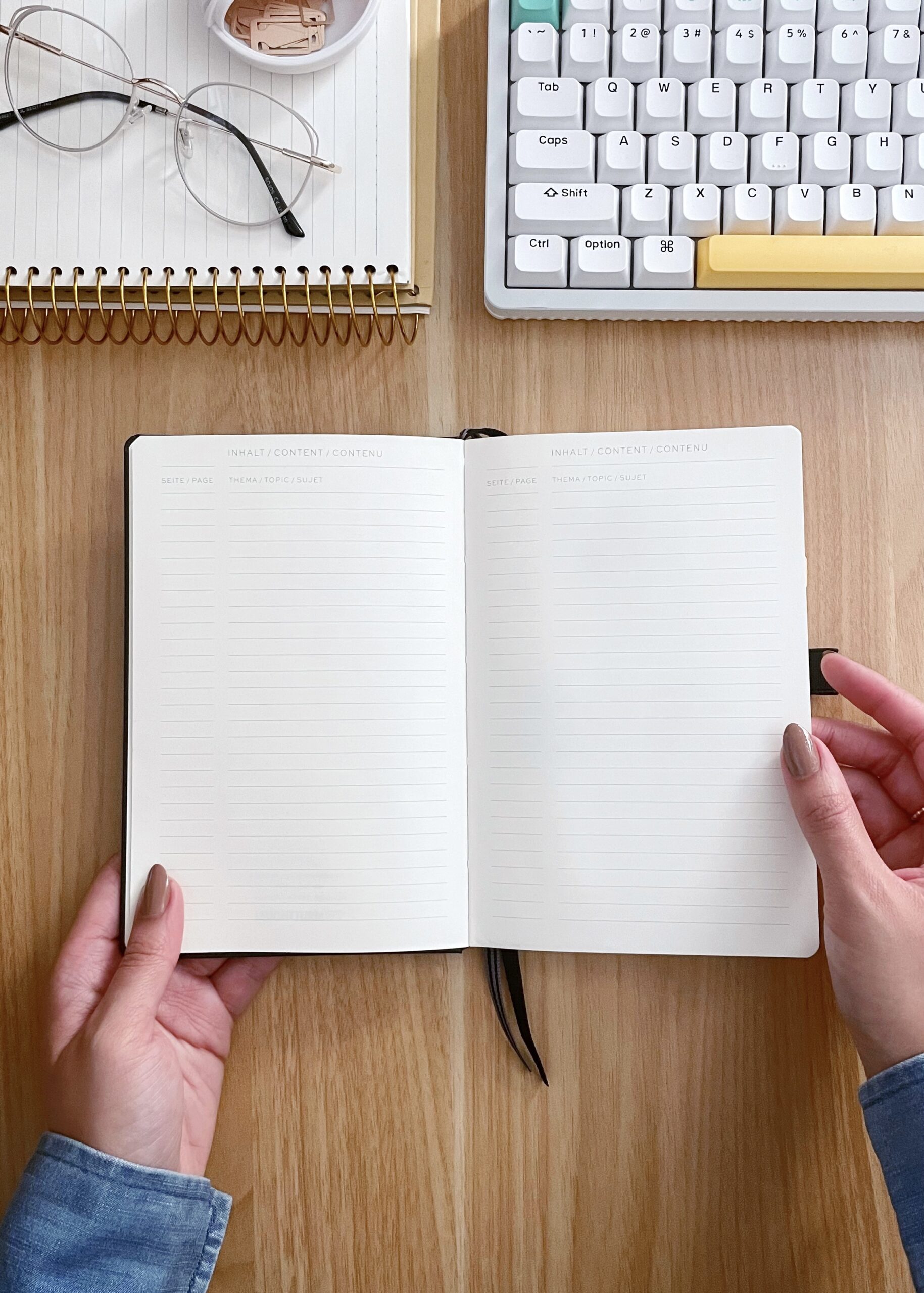
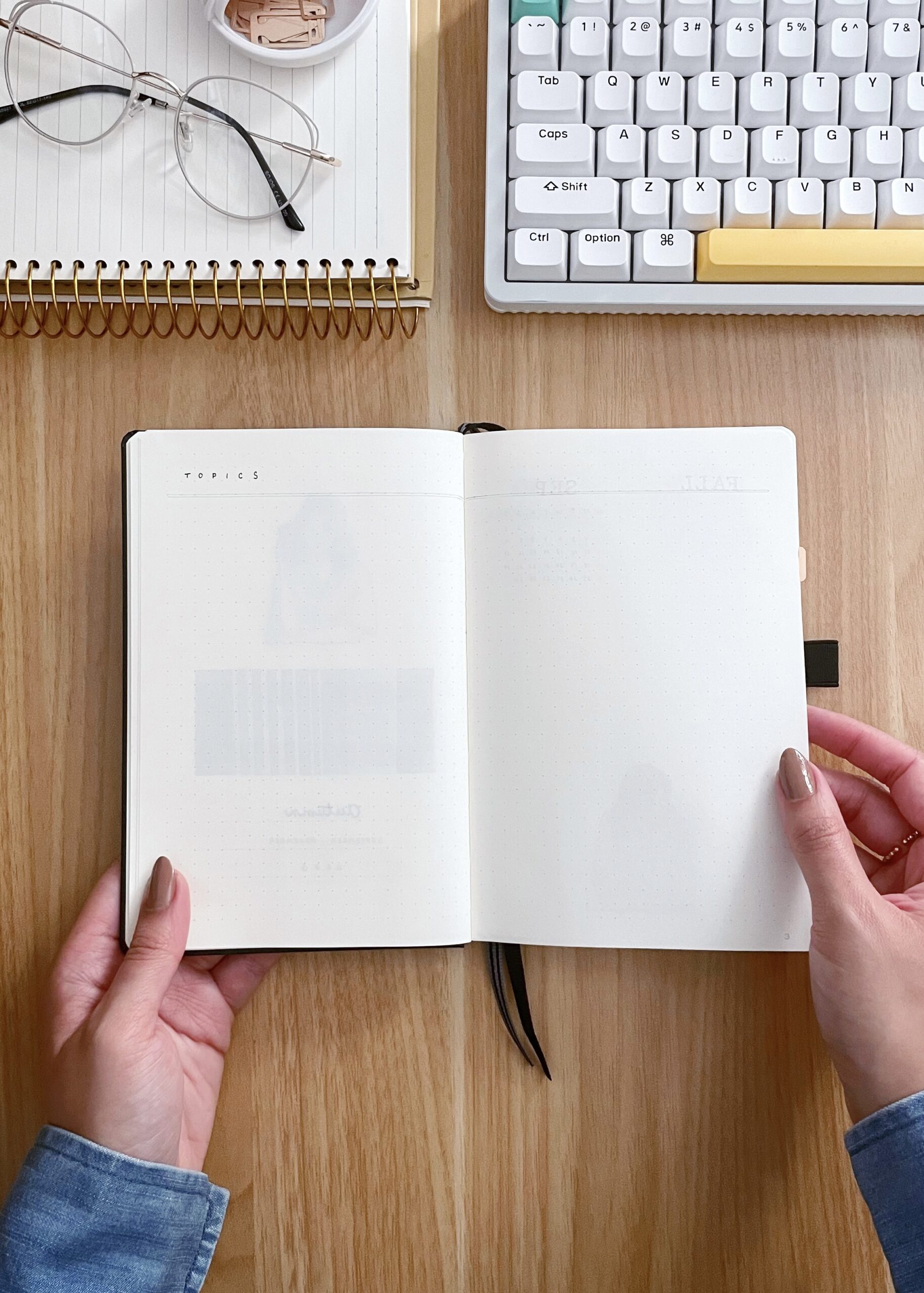
Leuchtturm1917 notebooks have an Index at the beginning, which I intend to use for “bigger” collection pages and spreads. However, I also made my own Topics index to thread themes that I write about often. I like to list these by month, so I can see what recurring topics I wrote about, and how often. For example, I noticed that I wrote a lot about therapy in August and a lot about friendship in June. It’s just an interesting thing to look back on and see where I put a lot of time and energy each month.
The Cover Page + Future Log
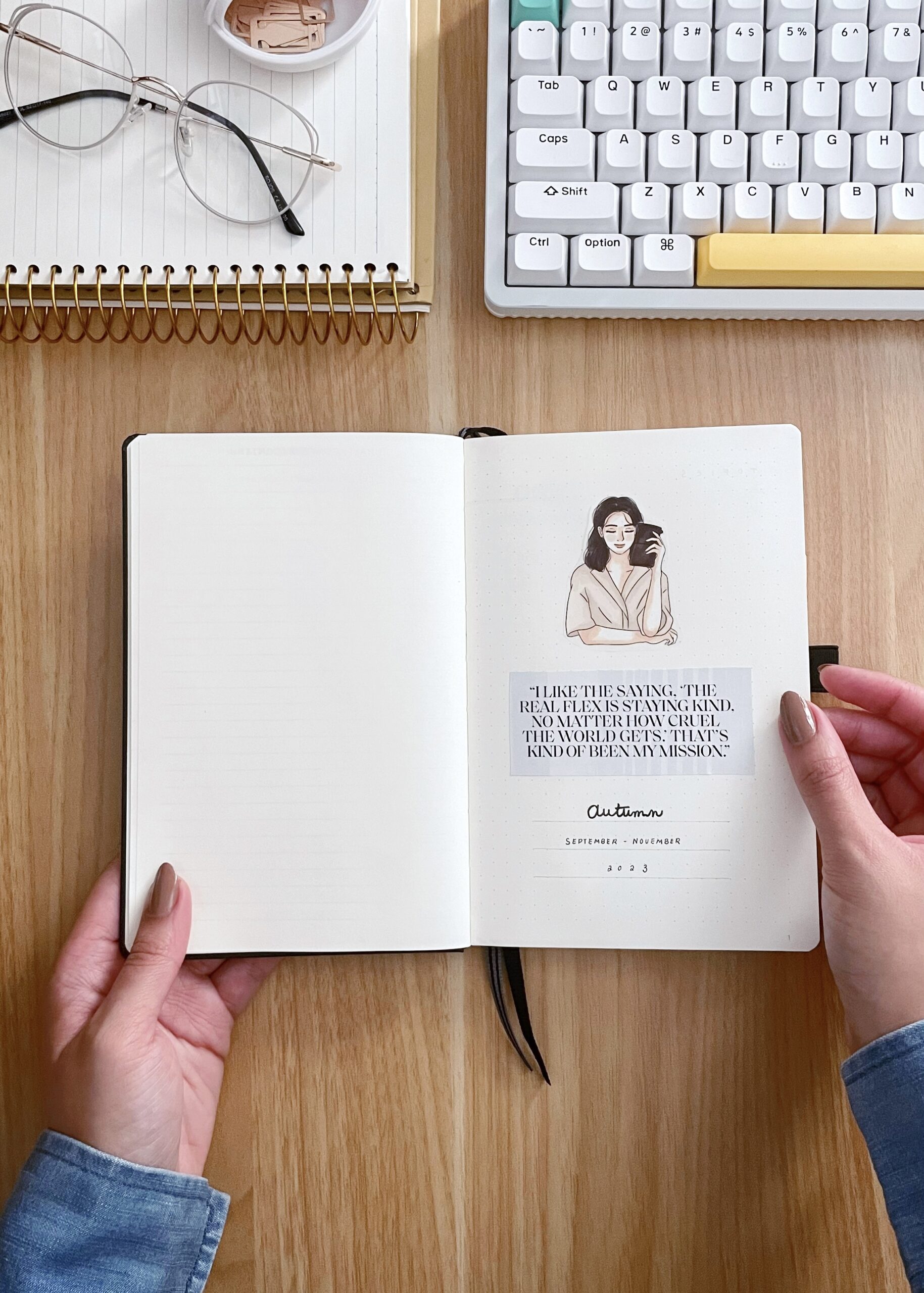
I keep a pretty minimal cover page — in this case, just a sticker, quote, and the months that the notebook covers. It’s just an easy way to “introduce” a new notebook.
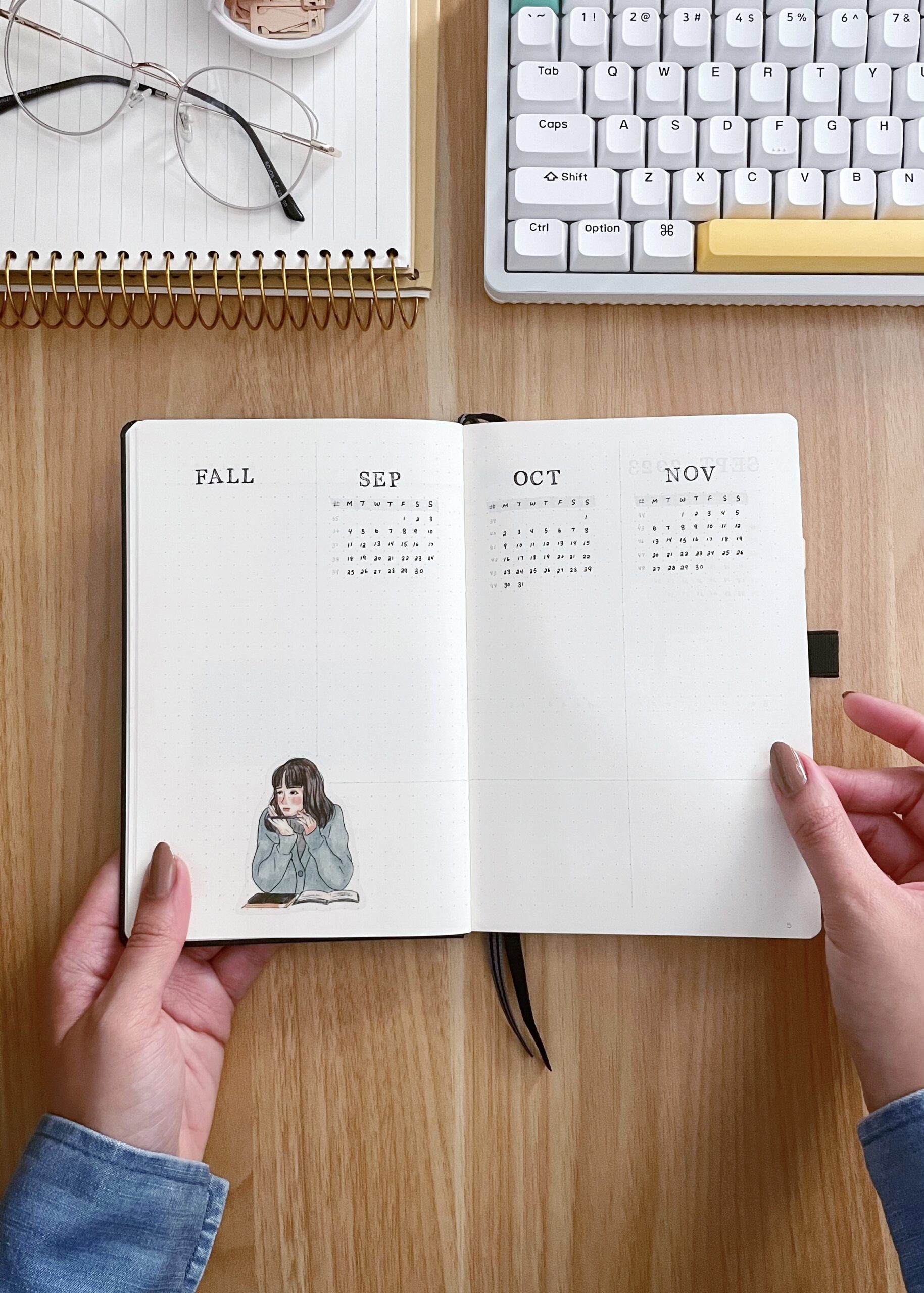
The Future Log is next. It is the “starting point” of my seasonal prep, where I list my intentions for the season in the far left column, and then the important events and birthdays under the months. Then in pencil or with sticky notes, I plan what I’d like to focus on for each month. Since I only have three months to a notebook, it’s not so far in the future that I’m not sure yet, but far enough away that I still have time to switch things around or make changes.
Then, once I figure out what my priorities for each month are, I add them to the bottom section of each month as a sort of checklist. This is what I will revisit and migrate over once I lay out the actual months in the future. This is an essential spread if you are using a rolling format (meaning you don’t set up your months or weeks in advance) and need to jot down things for the future.
The Monthly Dashboard + Calendar
My absolute favorite spreads in my journal are always the monthly dashboard and calendar views. Let’s talk about the dashboard first.
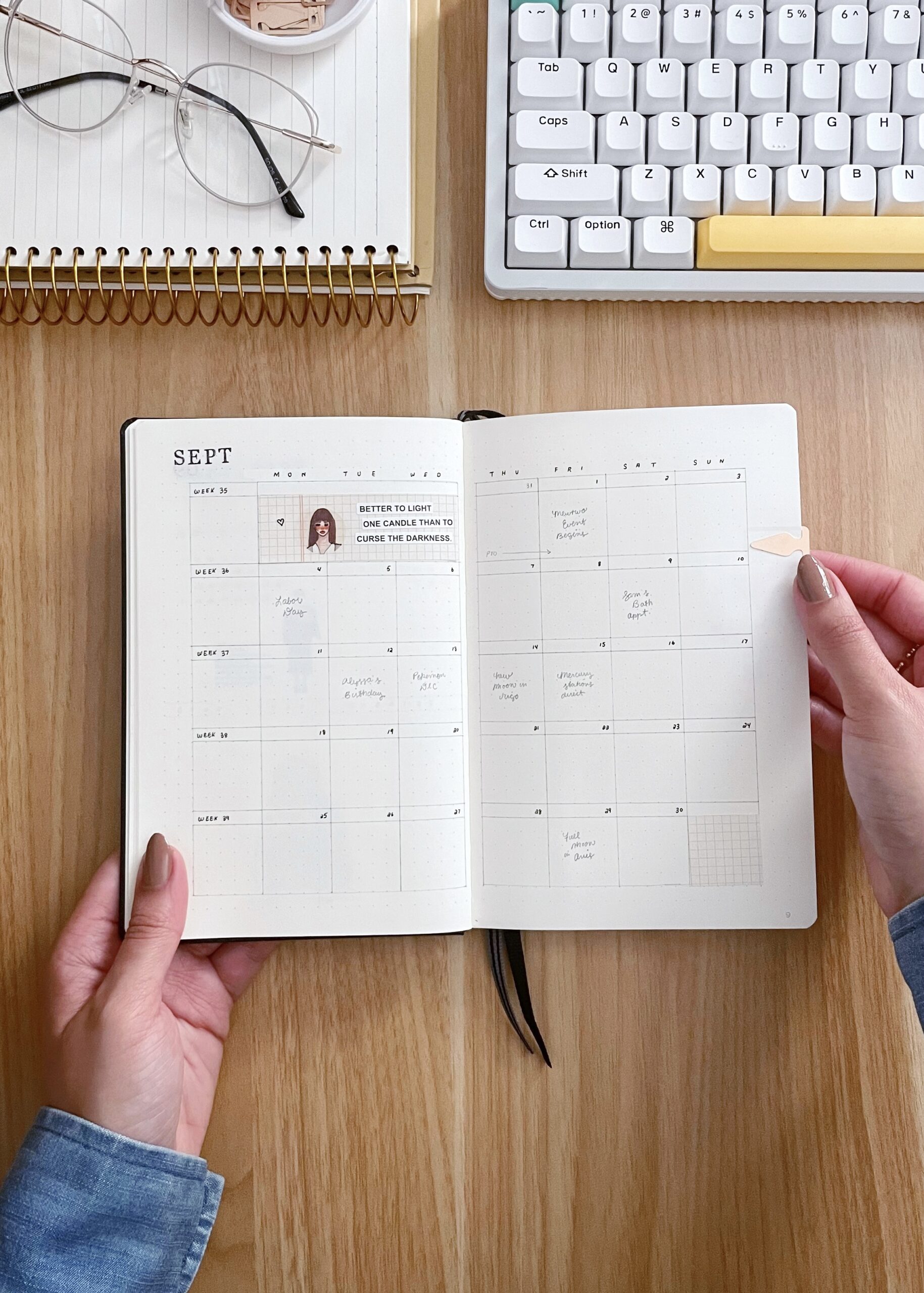
This month, I set up a “dashboard” where I list the major events, hobbies, and highlights at a glance. I consider this my month’s summary and it is purely for memory-keeping. Then on the right, I have my rolling master task list using the Alastair method. When I set up my weekly dashboards, I revisit this page and migrate tasks to their corresponding week.
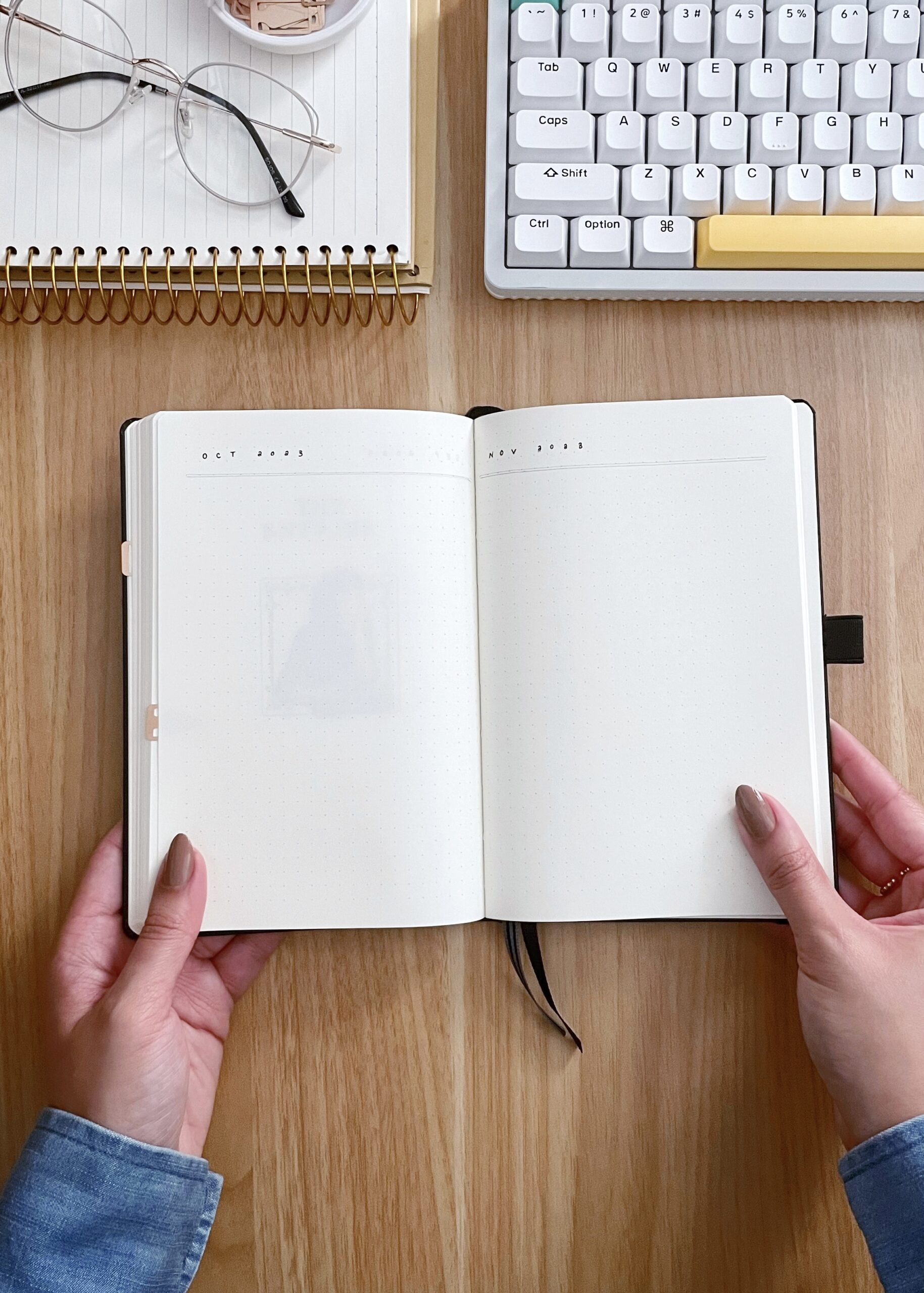
The calendar view is my ultimate memory-keeper. Instead of using this for planning, I usually fill this out after the day has happened. I also first write in pencil, then ink, and lightly decorate once they’ve occurred. It’s a way for me to get a visual snapshot of what my month looked like, and also a way for me to practice gratitude. Sometimes when I feel like the month wasn’t that great, I look back on this spread and notice that, hey, a lot of great stuff did happen, and here are all the little snapshots.
My weekly dashboard and rolling dailies begin after the calendar page (not pictured since I set these up as I go).
The Entries + Index
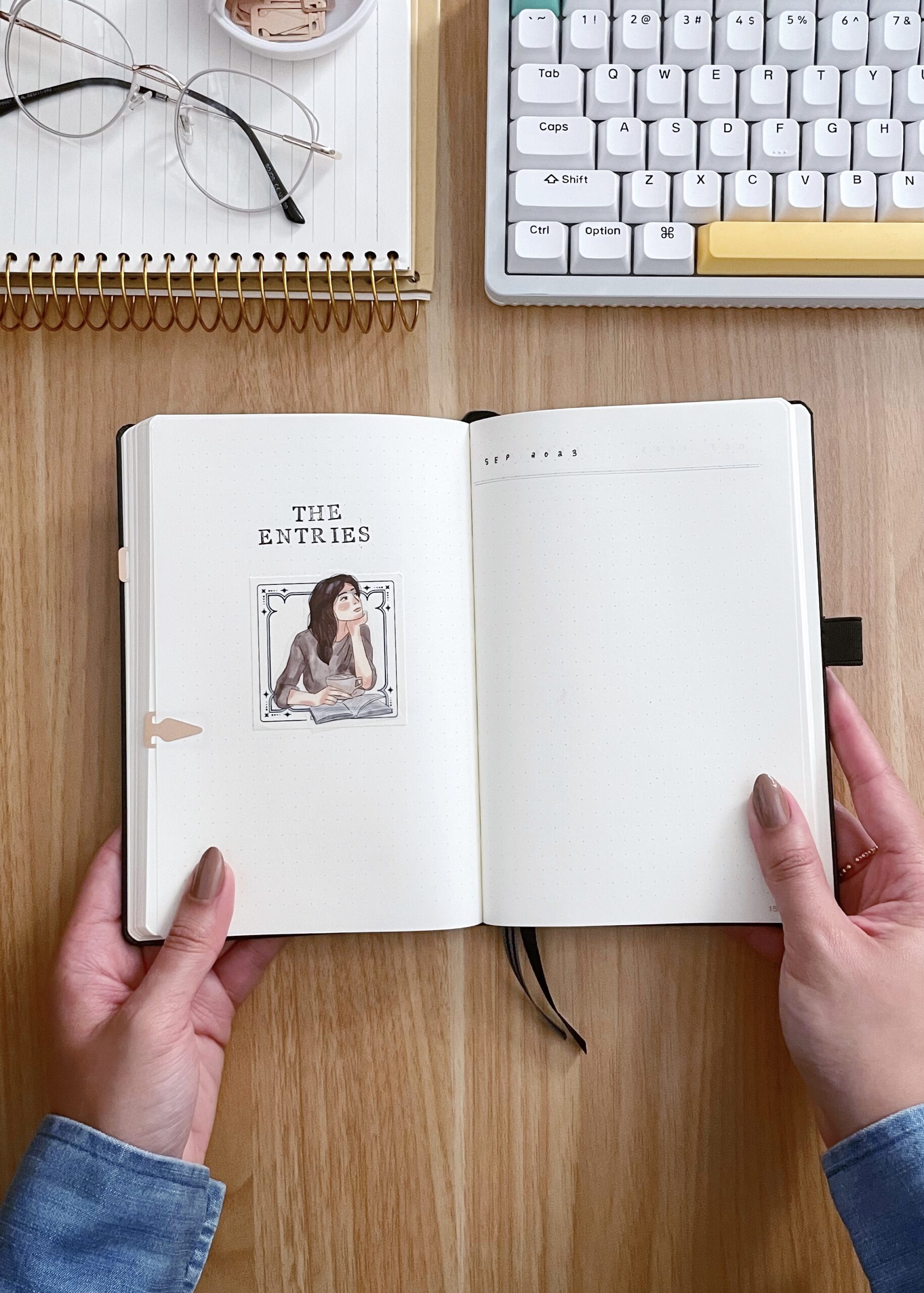
Finally, the back half of my notebook contains my long-form diary entries. Here’s where I will elaborate on anything else that happened in the day or do some morning pages. I index my journal entries separately here as well, adding context with a bit of a title/theme for each entry. It’s just another way for me to get a snapshot of the things I write about over the month that aren’t exactly task-related.
And that’s my setup for this fall! I will probably add collection pages, trackers, and other indexes where I see fit, but I like to keep the initial setup pretty simplistic. I love the flexibility of a bullet journal, which is why I’ve been using this method for years. It’s perfect for my ever-evolving lifestyle, and this seasonal setup has been working so great for me at the moment. I’m excited to continue using it!
Are you in a bullet journal this year, or thinking of starting one? I’d love to know!




I still think it’s super cool that you have a seasonal bullet journal. At one point, I was filling up my bullet journals so much, that I was only using them for about three months or so. This past year, I have been using my bullet journal at a normal pace, and it seems like I will finish my notebook in October or November! I have 2 backup notebooks on hand, so I have to decide which one I want to use this time around. After looking up what a B6+ looks like, I might get one in this size myself (after I’m done with the two notebooks I have on hand). I used a B6-like size when I was in college, and it worked well for me then. I sized up when I found many more options in the A5 size. We’ll see what I actually end up doing once I finish those two notebooks, aha.
I like the idea of doing a monthly dashboard, and it might be something I add into my own journal, so thank you for the inspiration! xx
Melina | http://www.melinaelisa.com
Thanks for your kind words! The seasonal bujo has been working so well for me at the pace I am journaling! I’m interested in seeing which notebook you do go with when it’s time. 👀 This is my first proper time in a B6+ so I’m really enjoying it! It’s such a cozy size.
I never thought about a seasonal journal but it makes perfect sense! I might try seasonal journaling next year or maybe I start a autumn journal just for fun! haha
One of my first bullet journals was a Leuchtturm1917 notebook and the quality is amazing but since I rarely finish a journal I couldn’t justify the cost so I switched to using Minimalism Art and PAPERAGE notebooks which are also nice. ♥
http://www.mooeyandfriends.com
Oh seasonal notebooks are SUCH a game changer for me! It’s definitely worth a shot if you are curious — even just one for fun. I’ve also tried Minimalism Art so def a good alternative to L1917. You’re right — it does get expensive. 😅
Hi Megan, i love your idea of seasonal notebooks 🥰
Especially because you join bullet journal and longform journal together. I always struggle with two books. I tried one bujo page and then the journaling for the day but that was NOT a good idea, didn’t last for a week 🤣 I only have a few questions for you if that’s ok. I am wondering what you do if the notebook isn’t full by the end of the season. Archive it anyway? And i am curious to see how you do december til…. Because no matter what i try i always want to start new journal in new year 🫣 maybe you have a hack so i can let it go 🤗 will keep reading your blog to find out 😉
Thank you so much for the inspiration 🥰🙏🏻
Aw, thanks for the kind words Kelly!
I don’t always fill every single page of a notebook. When I’m ready to move on, I just do. I don’t put too much pressure on myself for not filling every page. For my summer bujo, I had about 25 pages left? I archived it anyway. Summer is over! 😉 Maybe a seasonal book will help change your fill-a-book mindset because the goal isn’t to fill it, it’s just to write in it for the season. You know?
And yes, at this rate I will do Dec – Feb, since winter technically starts in Dec and spring starts in Mar. Over the years, I found the January start to be SO much pressure, so I don’t mind starting a new notebook in Dec instead. I like the idea of refreshing my goals/mindset/notebook with the seasons, not with the new year. It’s another thing that eliminates pressure. I hope that makes sense. 🙂 Thanks for reading!